
Views: 0 Author: Site Editor Publish Time: 2026-08-16 Origin: Site


Pure zirconium dioxide presents a fascinating engineering paradox. It possesses an exceptionally high melting point and remarkable baseline hardness. These traits suggest it would perform perfectly in extreme industrial environments. However, in its pure form, the material is practically useless for structural applications. It suffers from catastrophic structural failure upon cooling. Engineers and procurement teams constantly seek advanced materials for high-wear, high-temperature environments. They cannot risk the brittle failure typical of traditional ceramics. Sudden component failure leads to severe operational downtime and requires frequent part replacement. This compromises overall system reliability.
The industry-standard metallurgical solution to this problem is yttrium oxide doping. By introducing yttria into the crystal matrix, manufacturers stabilize the material. This process prevents the destructive phase changes that cause pure material to shatter. Understanding the precise mechanics of yttria stabilization is critical. It allows engineering teams to evaluate whether a specific Zirconia Ceramic formulation is the right choice for demanding industrial applications.
Phase Stabilization: Yttria prevents the destructive volume expansion of zirconia by locking its crystal structure in the tetragonal or cubic phase at room temperature.
Transformation Toughening: Yttria stabilized zirconia (YSZ) exhibits a unique "self-healing" mechanism where stress induces a localized phase change that stops crack propagation.
Application Specificity: Different yttria concentrations (e.g., 3 mol% vs. 5 mol% vs. 8 mol%) dictate the trade-off between maximum mechanical strength, optical translucency, and ionic conductivity.
Environmental Limitations: While highly durable, specific grades of YSZ are susceptible to Low-Temperature Degradation (LTD) in warm, humid environments, requiring careful environmental evaluation before deployment.
To understand the value of stabilization, you must first examine the crystallographic behavior of the pure material. Pure zirconium dioxide exists in three distinct crystallographic phases depending on the ambient temperature. From room temperature up to 1170°C, the material maintains a monoclinic crystal structure. This phase features low crystallographic symmetry. When heated between 1170°C and 2370°C, the structure transitions into a tetragonal phase. Above 2370°C, it shifts into a cubic phase. Each transition alters the physical dimensions of the crystal lattice.
The critical engineering problem occurs during the cooling cycle. When the material cools down from its high-temperature sintering state, it crosses the 1170°C threshold. The crystal structure reverts from the tetragonal phase back to the monoclinic phase. This specific crystallographic shift triggers a massive physical reaction. The material undergoes a sudden 4-5% volume expansion. This expansion does not happen uniformly across the entire component.
This localized volume expansion generates immense internal shear stresses. The expanding grains push against their neighboring structures. These internal forces rapidly exceed the inherent tensile strength of the material. As a result, pure zirconia ceramic parts spontaneously shatter into pieces simply by cooling down. This inherent failure mechanism renders the pure, undoped material completely unviable for any structural engineering purpose. You cannot machine it, you cannot load it, and you cannot deploy it in industrial machinery.
If you attempt to press and sinter pure zirconium dioxide powder, you will open the kiln to find a pile of cracked fragments or fine powder. The internal stresses are so violent that the part destroys itself before it even reaches room temperature. This phenomenon forced early material scientists to abandon pure zirconia for mechanical applications. They relied entirely on alumina and silicon carbide for decades. The breakthrough only came when researchers discovered how to manipulate the crystal lattice at the atomic level.
Material scientists solve this catastrophic expansion problem through chemical doping. The most effective dopant is yttrium oxide (Y₂O₃). Adding yttria directly alters the atomic architecture of the material. The yttrium ions replace some of the zirconium ions within the crystal lattice. Because yttrium has a different valence state than zirconium, this substitution creates oxygen vacancies within the structure. These oxygen vacancies relieve internal lattice strain. They effectively suppress the natural transition to the monoclinic phase. The material remains locked in its high-temperature tetragonal or cubic state even when cooled to room temperature.
Achieving this stabilized state requires precise manufacturing protocols. Manufacturers utilize co-precipitation methods to ensure the yttrium oxide distributes perfectly evenly throughout the zirconium dioxide powder. Following this preparation, the material undergoes a rigorous high-temperature heat treatment known as sintering. This precise thermal management fuses the particles and locks the crystal structure into its stabilized configuration. Without exact temperature control during sintering, the yttria will not distribute properly, leaving weak points in the final component.
The powder preparation phase dictates the final quality of the ceramic. Engineers mill the doped powder to an ultrafine particle size, often sub-micron. They mix this powder with organic binders to allow for pressing or extrusion. Once formed into a green state, the parts enter the kiln. The sintering profile must ramp up slowly to burn off the binders without causing micro-cracking. Then, the temperature pushes past 1400°C to achieve full densification. During this phase, the particles fuse, eliminating porosity and locking the yttria into the lattice.
The exact concentration of yttria dictates the final phase composition and the resulting material properties. Engineers categorize the material based on this stabilization level.
Fully Stabilized Zirconia (FSZ): This variant typically contains 8 mol% yttria. The high yttria concentration locks the entire crystal structure into the cubic phase. FSZ lacks the extreme mechanical toughness of other grades. However, it provides exceptionally high ionic conductivity at elevated temperatures. Engineers specify FSZ primarily for solid oxide fuel cells and high-performance oxygen sensors.
Yttria Partially Stabilized Zirconia (PSZ / TZP): Tetragonal Zirconia Polycrystal typically utilizes 3 mol% yttria. This specific concentration stabilizes the material in the tetragonal phase at room temperature. This 3 mol% formulation dominates structural and high-wear applications due to its incredible mechanical resilience.
The 3 mol% formulation provides a unique mechanical advantage known as transformation toughening. This phenomenon acts as a microscopic self-healing mechanism. When a component experiences severe mechanical stress, a micro-crack may begin to form. The stress concentration at the very tip of this advancing crack is immense. In traditional ceramics, this stress simply rips the material apart.
In yttria stabilized zirconia, the intense stress field at the crack tip triggers a highly localized phase transformation. The stress forces the immediate surrounding grains to revert from the metastable tetragonal phase back into the monoclinic phase. As established earlier, this transition causes a 4-5% volume expansion. Because this expansion occurs strictly around the crack tip, the expanding grains physically compress the crack. They pinch the fracture shut. This localized expansion absorbs the fracture energy and stops the crack from propagating further into the component.
Think of it like a built-in shock absorber at the microscopic level. When a heavy load hits the ceramic surface, the material actively fights back against failure. The energy that would normally split an alumina part in half gets consumed by the phase transformation. This is why you can strike a high-quality YSZ component with a hammer and it will ring like steel rather than shatter like glass.
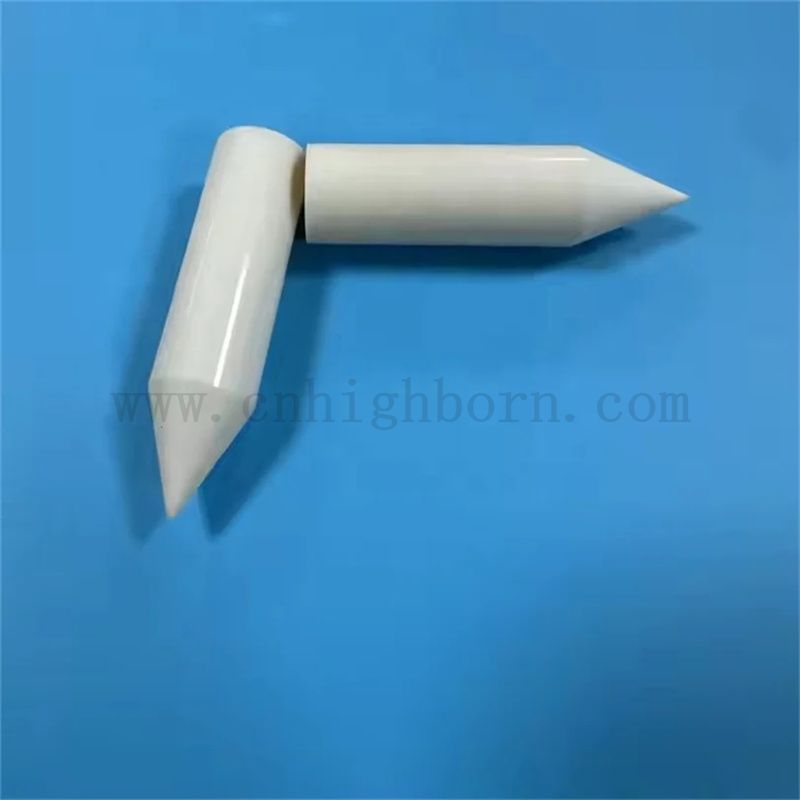
The transformation toughening mechanism fundamentally changes how the material performs in the field. It elevates the ceramic from a brittle insulator to a high-performance structural asset. The resulting mechanical properties surpass almost all traditional engineering ceramics.
The most significant enhancement is exceptional fracture toughness. Fracture toughness measures a material's ability to resist crack propagation under load. Traditional alumina ceramics typically exhibit a fracture toughness of 3-4 MPa·m^1/2. They chip and shatter under impact. YSZ routinely achieves a fracture toughness of 8-10 MPa·m^1/2. This massive increase allows the material to absorb mechanical shocks and impacts that would instantly destroy conventional ceramic components.
Furthermore, the 3YSZ formulation achieves full theoretical density during the sintering process. The material develops an ultrafine grain structure. This microscopic uniformity eliminates internal porosity. A non-porous structure translates directly to superior surface characteristics. Manufacturers can polish these components to a flawless, mirror-like surface finish. This ultra-smooth surface drastically reduces friction coefficients in moving assemblies. It prevents particulate generation and minimizes wear on mating components.
In fluid handling, surface finish dictates seal longevity. A porous or rough surface acts like sandpaper against polymer seals. The ultrafine grain of YSZ allows for lapping and polishing down to an Ra of 0.02 microns. At this level of smoothness, the ceramic glides against other materials with minimal resistance.
Thermal shock resistance also improves dramatically. Industrial environments often subject components to rapid, extreme temperature fluctuations. Traditional ceramics crack under thermal shock due to uneven thermal expansion. The stabilized phase and high density of YSZ allow it to withstand these rapid thermal cycles without compromising structural integrity. The material maintains its physical dimensions and mechanical strength even when repeatedly heated and cooled.
Finally, the stabilized lattice provides outstanding chemical inertness. The material resists degradation from strong acids, aggressive alkalis, and even molten metals. It does not oxidize or rust. This makes it an ideal candidate for aggressive chemical processing environments where metallic components would rapidly corrode and fail.
Specifying advanced ceramics requires a clear understanding of operational demands. Procurement and engineering teams must evaluate specific success criteria when selecting materials for high-wear applications. Vickers hardness determines the material's resistance to surface indentation and scratching. The coefficient of friction dictates how much energy is lost to heat during mechanical movement. Surface finish retention ensures the component maintains its operational tolerances over millions of cycles. Dimensional stability guarantees the part will not warp or deform under continuous heavy loading.
To properly specify these components, engineering teams should follow a systematic evaluation process:
Analyze the primary mechanical load to determine if the application requires high fracture toughness or simply high surface hardness.
Map the thermal environment, noting peak operating temperatures and the frequency of rapid thermal cycling.
Assess chemical exposure, specifically looking for the presence of hot steam or highly aggressive acidic compounds.
Calculate the required dimensional tolerances to determine the extent of post-sintering diamond grinding necessary.
Evaluate the mating materials in the assembly to ensure the ceramic surface finish will not cause excessive wear on softer opposing parts.
Several critical industrial sectors rely heavily on these advanced material properties. The unique combination of toughness and surface finish makes specific applications highly successful.
Pump Seals: Fluid handling systems processing abrasive slurries quickly destroy metallic seals. wear resistant zirconia ceramic parts maintain perfect flatness and resist scratching, ensuring leak-free operation over extended periods.
Valve Seats: High-pressure chemical pipelines require valve seats that will not deform or corrode. The chemical inertness and dimensional stability of YSZ prevent dangerous leaks in aggressive fluid systems.
Deep-Well Downhole Tools: Oil and gas extraction subjects tools to extreme subterranean pressures, abrasive rock, and corrosive fluids. The fracture toughness of YSZ prevents tool failure deep underground.
Wire Drawing Capstans: Manufacturing metal wire requires guiding the wire over capstans at high speeds. The mirror-like finish of YSZ capstans prevents scratching the wire while resisting the continuous abrasive friction.
Precision Bearings: Certain environments prohibit the use of liquid lubricants. YSZ bearings operate dry in high-temperature or vacuum environments without seizing or degrading.
To make informed engineering decisions, you must compare YSZ against other common industrial materials. Each material offers specific advantages depending on the operational environment.
Material Comparison for High-Wear Applications
| Material Type | Fracture Toughness | Surface Finish Capability | Weight / Density | Corrosion Resistance |
|---|---|---|---|---|
| Yttria Stabilized Zirconia (3YSZ) | Very High (8-10 MPa·m^1/2) | Excellent (Mirror Polish) | Moderate (6.0 g/cm³) | Excellent |
| Alumina (Al₂O₃) | Low (3-4 MPa·m^1/2) | Good | Low (3.9 g/cm³) | Very Good |
| Tungsten Carbide (WC) | High | Good | Very High (15.6 g/cm³) | Moderate (Binder Dependent) |
| Zirconia Toughened Alumina (ZTA) | Moderate (5-7 MPa·m^1/2) | Very Good | Low-Moderate (4.1 g/cm³) | Very Good |
When comparing YSZ to traditional alumina, YSZ offers significantly higher fracture toughness and a superior surface finish. Alumina remains highly relevant for static, low-impact environments, but YSZ dominates in dynamic, high-stress applications. Against tungsten carbide, YSZ provides a massive weight reduction. Tungsten carbide is incredibly dense and heavy. YSZ delivers comparable wear characteristics while offering vastly superior corrosion resistance, as it lacks the metallic binders that degrade in chemical environments.
Engineers also frequently utilize Zirconia Toughened Alumina (ZTA). ZTA serves as a highly effective hybrid alternative. Manufacturers disperse yttria stabilized zirconia particles throughout an alumina matrix. This composite approach balances the extreme toughness of YSZ with the lighter weight and different thermal properties of alumina. ZTA provides an excellent middle ground for applications requiring enhanced impact resistance without necessitating pure YSZ.
Evaluating these components requires looking beyond the initial acquisition phase. The true value emerges through operational efficiency. Implementing these advanced components drastically reduces maintenance cycles. Equipment runs longer without requiring teardowns for part replacement. This extends the mean time between failures (MTBF) significantly. Decreasing machine downtime directly increases production output. By eliminating the frequent replacement of degraded metallic or standard ceramic parts, facilities optimize their operational workflow and maximize equipment availability.
Despite its exceptional properties, YSZ is not universally applicable. Engineers must understand the material's specific vulnerabilities to prevent premature system failure. The most significant implementation risk involves environmental exposure.
The primary vulnerability of the 3YSZ formulation is Low-Temperature Degradation (LTD), also known as hydrothermal aging. This degradation occurs when the material operates continuously in environments containing moisture at moderate temperatures, typically between 150°C and 300°C. Water radicals from steam or high humidity interact with the oxygen vacancies in the crystal lattice. This chemical interaction destabilizes the tetragonal phase at the surface of the component.
The destabilization triggers a spontaneous, localized transformation back to the monoclinic phase. As this surface layer expands, it creates microscopic surface cracks. Over time, moisture penetrates deeper into these micro-cracks, driving the degradation further into the material. This progressive aging reduces the overall mechanical strength of the component. Engineers must carefully evaluate environmental humidity and continuous operating temperatures before deploying 3YSZ in steam-rich environments.
Adjusting the yttria concentration creates a strict inverse relationship between mechanical strength and functional properties. Increasing the yttria content to 5 mol% significantly improves the material's optical translucency. This makes 5YSZ highly desirable for specific optical components and dental applications. However, this increased stabilization reduces the material's capacity for transformation toughening. The fracture toughness drops. Furthermore, higher yttria concentrations often make the material more susceptible to strength degradation after environmental aging. You cannot maximize both optical clarity and mechanical toughness simultaneously.
Manufacturing precision components from YSZ requires careful resource management. Once the material completes the sintering process, it achieves extreme hardness. Post-sintering precision machining requires specialized diamond tooling. Standard cutting tools cannot penetrate the surface. Extensive diamond grinding consumes massive fabrication resources and extends production timelines.
To optimize production, manufacturers rely heavily on near-net-shape manufacturing, often called green machining. In this process, machinists cut and shape the compacted ceramic powder before it undergoes high-temperature sintering. The green material is relatively soft and easy to machine. However, the material shrinks by approximately 20% during the final sintering phase. Engineers must calculate this shrinkage rate perfectly during the green machining phase to ensure the final sintered part meets exact dimensional tolerances.
If a part requires tight tolerances, such as a bearing surface or a mechanical seal face, green machining alone is insufficient. The manufacturer must leave a small amount of excess material on the green part. After sintering, operators use diamond grinding wheels to lap the surface down to the final micron-level specification. This two-step process balances production speed with extreme dimensional accuracy.
Yttria stabilization represents a critical advancement in materials science. Through precise high-temperature heat treatment and chemical doping, the process elevates zirconia from a brittle, unusable curiosity into a premier engineering ceramic. By locking the crystal structure and enabling transformation toughening, YSZ provides unparalleled fracture toughness, wear resistance, and chemical inertness for the most demanding industrial environments.
When shortlisting materials, use a strict evaluation logic. Does the application involve high mechanical loads? YSZ is an excellent candidate. Does the system experience high impact or severe abrasive wear? YSZ will likely outperform standard alternatives. However, if the component faces continuous exposure to pressurized steam between 150°C and 300°C, proceed with extreme caution. In those specific hydrothermal conditions, you must evaluate specialized degradation-resistant grades or consider hybrid composites like ZTA.
To successfully implement these advanced ceramics, follow these next steps:
Consult with experienced ceramic manufacturers during the earliest stages of the design phase to align material properties with mechanical expectations.
Optimize your part geometry specifically to account for the significant volumetric shrinkage that occurs during the final sintering process.
Specify the exact mol% of yttria required based on your precise operational environment, balancing the need for toughness against functional requirements.
Conduct a thorough environmental audit of your operating conditions, specifically measuring continuous humidity and temperature ranges, to prevent premature hydrothermal aging.
A: 3YSZ contains 3 mol% yttria and is partially stabilized in the tetragonal phase. This formulation maximizes mechanical strength, fracture toughness, and wear resistance for structural components. 8YSZ contains 8 mol% yttria and is fully stabilized in the cubic phase. It lacks high mechanical strength but offers exceptional ionic conductivity, making it ideal for solid oxide fuel cells and oxygen sensors.
A: While magnesia and ceria can stabilize the crystal structure, yttria provides the optimal balance of material properties. Yttria stabilization achieves an ultrafine grain size, which allows for full theoretical density and superior surface finishes. It consistently delivers the highest mechanical strength and long-term reliability for demanding structural components compared to other dopants.
A: Yes, under specific conditions. 3YSZ is susceptible to Low-Temperature Degradation (LTD) when exposed to moisture or steam at temperatures between 150°C and 300°C. Water radicals destabilize the surface, causing micro-cracking and a reduction in strength. Modern material doping and careful environmental evaluation help mitigate this aging process.
A: For structural and high-wear applications, the practical continuous use temperature typically ranges up to 1000°C to 1200°C. Operating continuously above these temperatures can cause the mechanical properties, specifically fracture toughness and strength, to gradually drop as the material approaches its phase transition thresholds.
A: Zirconia ceramic parts are significantly harder than steel, providing vastly superior wear resistance and lower friction coefficients. They do not oxidize, rust, or react to harsh chemicals. However, unlike steel, ceramics lack ductility. They cannot bend or deform under extreme tension, meaning they have lower overall tensile strength and remain susceptible to shattering under extreme, localized point-impacts.