
Views: 0 Author: Site Editor Publish Time: 2026-08-18 Origin: Site


A newly installed aeration system often produces a uniform mist of micro-bubbles. However, performance frequently degrades into large, inefficient bubbles or restricted airflow within months. This operational frustration leads to lower dissolved oxygen levels. Reduced oxygen strains aquatic life and severely hampers biological filtration. The primary culprits behind this degradation include calcium carbonate scaling, bacterial biofilm, and particulate clogging within the micropores. While cheap sand stones are entirely disposable, a premium Aquarium Air Stone requires a systematic maintenance protocol. Proper upkeep preserves its structural integrity and optimizes gas exchange. You must clear internal blockages to deliver long-term performance and maintain optimal water quality.
Performance Dependency: Fine bubble generation relies on the precise matching of air pump pressure (PSI/LPM) to the specific resistance of the porous ceramic aeration stone.
Maintenance Frequency: Proactive monthly cleaning prevents irreversible calcification deep within the ceramic matrix, extending the asset's lifespan significantly.
Chemical vs. Thermal Cleaning: Hydrogen peroxide and mild acidic solutions (like white vinegar) are the safest, most effective agents for dissolving organic and inorganic blockages without leaving toxic residues.
Storage Risks: Improper storage, particularly allowing a water-logged stone to freeze, will cause micro-fractures that permanently destroy fine bubble capabilities.
Understanding the physics of gas exchange is critical for optimizing any aquatic system. The success of aeration depends heavily on the physical relationship between bubble size and surface area. Smaller bubbles provide exponentially better gas exchange than larger ones. A 1.5 mm bubble exposes a vastly greater surface area to the surrounding water compared to a 3 mm bubble of the same total air volume. This increased surface area facilitates rapid oxygen transfer into the water column. Furthermore, smaller bubbles rise more slowly to the surface. This extended contact time allows more oxygen to dissolve before the bubble escapes. Fine bubbles also create a gentle, steady upward current. This current displaces water efficiently without creating chaotic turbulence that stresses sensitive fish or uproots delicate plants.
The material science behind a porous ceramic aeration stone dictates its performance capabilities. Manufacturers create these diffusers through a precise sintering process. They compress alumina or silica powders and heat them in kilns to extreme temperatures, often exceeding 1300°C, until the particles fuse. This manufacturing method creates a highly rigid, uniform pore structure. The consistency of these micropores forces air to exit in tiny, uniform streams. Standard bonded-sand or plastic alternatives lack this structural uniformity. They feature irregular gaps that allow air to escape in large, unpredictable bursts. The heavy specific gravity of sintered materials also ensures the unit stays firmly planted on the tank floor without relying on unreliable suction cups.
You must contrast rigid sintered structures with flexible rubber or plastic strip diffusers. Flexible strips operate on a different mechanical principle. They expand under pressure to release air and contract when the pump stops. You can physically bend flexible strips to crack and flake off exterior calcium deposits. Rigid ceramics do not offer this mechanical flexibility. They rely entirely on chemical or thermal maintenance to clear internal micropores. You cannot bend or flex a ceramic unit without shattering the matrix.
The degradation curve of a ceramic diffuser follows a predictable timeline. When first installed, the clean pores produce a fine, even mist. Over time, the unit undergoes several distinct stages of restriction:
Initial operation: Pores remain clear, and backpressure sits at the baseline level for your specific pump.
Biofilm colonization: Bacteria form a slime layer over the outer surface and just inside the exit pores.
Mineral precipitation: Calcium and magnesium ions bond to the biofilm and the rough ceramic edges, hardening the blockage.
Pore restriction: Air velocity increases through the narrowed gaps, forcing adjacent air streams to collide and merge into larger bubbles.
Terminal clogging: Backpressure exceeds the pump's maximum capacity, and airflow stops entirely.
Troubleshooting aeration problems requires isolating the air pump output from the diffuser resistance. A very common scenario involves a brand-new unit producing few or no bubbles. This usually indicates a mismatch between the pump's capabilities and the stone's requirements. Ceramic micropores create significant backpressure. Your air pump must generate a minimum PSI to breach these pores and push air into the water. If you connect a dense ceramic model to a weak diaphragm pump designed for shallow bowls, the air simply cannot escape. You must verify if your specific pump model is adequately sized for the depth of your tank and the density of the material. Linear piston pumps are generally required for deep water applications or when running multiple dense diffusers.
Tuning airflow rates is just as important as having adequate pressure. You should always test the equipment at different airflow rates during installation. Supplying too much air pressure is a frequent mistake. Excess pressure forces a massive volume of air through the pores simultaneously. The bubbles collide and merge prematurely on the surface, creating large, inefficient bubbles that defeat the purpose of a micropore design. You should use bleed valves to dial in the exact pressure required. A bleed valve vents excess air into the room, allowing you to fine-tune the pressure reaching the diffuser until you achieve a perfect fine mist. Inline restrictor valves often cause backpressure damage to the pump diaphragm, making bleed valves the superior choice.
When performance drops, you must identify the specific type of clog affecting the unit. Different blockages require different cleaning strategies. Organic clogs consist of bacterial biofilm and algae. They usually present with a slimy texture and greenish or brown discoloration on the surface. Inorganic clogs are caused by hard water scale. They appear as a white, crusty buildup. This is highly common in systems with high GH and KH water parameters, such as African cichlid tanks. Particulate clogs involve physical debris. Silt from the substrate or degraded rubber from old airline tubing can lodge directly into the inlet nozzle or surface pores.
Aeration Troubleshooting Matrix
| Symptom | Probable Cause | Field Action |
|---|---|---|
| No bubbles from a brand new unit | Insufficient pump PSI or extreme water depth | Test in a shallow container; upgrade to a linear piston pump if it works shallow but fails deep. |
| Bubbles are large and chaotic | Excessive airflow forcing bubbles to merge | Install a bleed valve and vent excess air until a fine mist forms. |
| Airflow slowly decreases over months | Biofilm or calcium scale restricting pores | Initiate chemical deep cleaning protocol (H2O2 or acid bath). |
| Air leaks from the base or sides in large bursts | Impact fracture or freeze damage to the matrix | Discard and replace the unit; structural damage cannot be repaired. |
Establishing a baseline testing framework helps isolate the root cause of poor flow. Hydrostatic pressure increases with water depth. A pump might push air through a unit at the surface but fail at the bottom of a deep tank. To test this, place the problematic unit in a shallow container of water. If it produces a fine mist in two inches of water but fails in two feet of water, your pump lacks the necessary PSI. Check valves and long runs of airline tubing also add to this backpressure. If it fails to produce bubbles even in the shallow container, the micropores are severely clogged and require immediate deep cleaning.
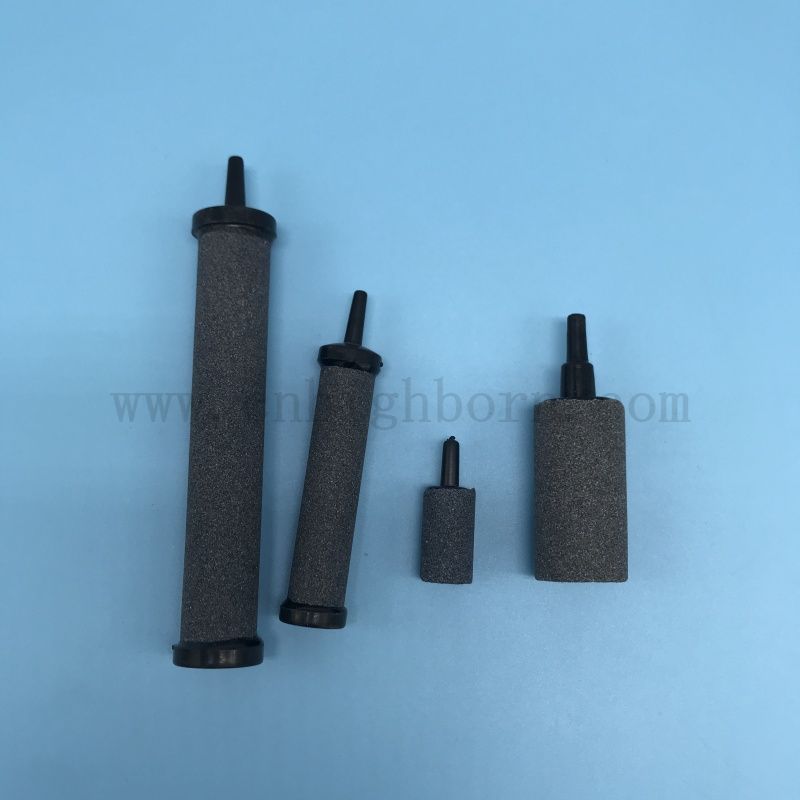
Maintaining a fine bubble aquarium diffuser requires a proactive approach. Routine preventative maintenance should occur monthly to prevent irreversible calcification. Start with physical brushing. Remove the unit from the system and scrub the exterior using a stiff-bristled nylon brush under warm, running water. Never use a wire brush, as the metal bristles will score the ceramic and permanently damage the pore structure. This physical scrubbing removes loose organic debris and soft algae. Next, employ back-flushing techniques. Attach a short piece of clean airline tubing to the inlet nozzle. Use a large plastic syringe to push clean water in reverse through the tubing and into the matrix. This reverse pressure dislodges trapped particulates from the internal chambers. Keep in mind that environmental factors dictate your maintenance schedule. Nutrient-dense environments, such as hydroponic reservoirs or heavily planted aquariums, accelerate biofilm growth. These systems require a much more aggressive preventative cleaning schedule.
When routine brushing fails to restore performance, you must utilize chemical deep cleaning for stubborn blockages. The hydrogen peroxide method is highly effective for organic matter. Prepare a small container with standard 3% household hydrogen peroxide. Submerge the unit completely. The peroxide will immediately begin to oxidize organic slime and algae. You will notice active effervescence as bubbles form on the surface. Let it soak for 12 to 24 hours. Regular, brief peroxide dips can proactively increase the overall lifespan of the equipment. After soaking, rinse thoroughly with clean water. Do not blow into the inlet nozzle with your mouth to clear it, as this introduces bacteria and moisture back into the clean matrix.
For inorganic hard water scale, an acid bath is necessary. Calcium carbonate will not dissolve in peroxide; it requires a low pH solution. White vinegar or a dissolved citric acid solution works best. Mix one part white vinegar with one part water, or dissolve two tablespoons of citric acid powder into a liter of warm water. Submerge the scaled unit in the acidic solution. The acid reacts with the calcium, producing carbon dioxide bubbles as the crust dissolves. A 24-hour soak is usually sufficient for moderate scaling. You must exercise safety precautions during this process. Highly concentrated acids can degrade the plastic or brass airline connector attached to the base. Always use mild household acids and monitor the soak to protect the inlet fittings.
Thermal cleaning methods offer an alternative for specific materials. The boiling water method is suitable for glass-bonded and high-temperature sintered models. Boiling water expands the pores slightly and melts away stubborn organic sludge. However, you must evaluate the risks of thermal shock. Never drop a cold unit directly into boiling water, and never run cold water over a hot unit. Follow this strict sequence to prevent shattering:
Submerge the cold unit in a pot of room-temperature water.
Place the pot on a stove and gradually increase the heat to a rolling boil.
Boil for exactly ten minutes to expand the pores and dislodge internal debris.
Turn off the heat and leave the unit in the water until it returns completely to room temperature.
Remove and air dry completely before storage or reuse.
Proper drying and winterization procedures are mandatory. If you plan to store the equipment, it must be completely dry internally. Place the cleaned unit in a warm, dry location with good airflow for several days. You can also attach it to an air pump outside the water to blow dry air through the pores for a few hours. The critical risk here involves trapped moisture. If a water-logged unit is placed in cold storage and freezes, the trapped water will expand. This expansion causes internal micro-fractures that permanently destroy the fine bubble capabilities. The unit will leak large bubbles from these invisible cracks upon reuse, rendering it useless.
Facility managers and dedicated hobbyists must evaluate the labor and performance ratio of their aeration equipment. A high-end ceramic aquarium air stone carries a higher upfront investment. However, you must compare this against the recurring labor and replacement frequency of standard blue or grey sand stones every two to three months. Disposable stones degrade rapidly, clog permanently, and often crumble into the water column. Fish can ingest these broken sand particles, leading to internal blockages. A well-maintained sintered unit can last for several years. Over a two-year period, the cumulative replacement frequency of disposable stones frequently exceeds the single purchase of a premium unit.
You must also assess the labor and upkeep trade-offs. Disposable units offer the ultimate convenience. When they clog, you simply throw them away and attach a new one. This requires zero maintenance time. Conversely, premium models demand a time investment. You must dedicate time to physical brushing, chemical soaking, and thorough rinsing. For a single small quarantine tank, the convenience of disposables might seem appealing. However, for serious aquarists running display tanks, the superior gas exchange, lack of chaotic turbulence, and aesthetic appeal of a fine mist justify the monthly maintenance routine.
System scalability heavily influences this decision. Maintaining uniform diffusers is highly critical in multi-tank setups, commercial hatcheries, or large-scale hydroponic systems. In these environments, consistent dissolved oxygen levels are strictly monitored. Variable airflow rates caused by degrading disposable stones can trigger system alarms or stress livestock. Premium models provide predictable, stable resistance. This stability allows facility managers to balance airflow across dozens of tanks using centralized commercial blowers and manifold valve systems. The reliability of sintered materials makes them the only viable choice for scalable, professional operations.
Diffuser Material Comparison
| Feature | Premium Sintered Material | Disposable Sand/Plastic |
|---|---|---|
| Initial Investment | Higher upfront requirement | Very low initial requirement |
| Bubble Size | Consistently ultra-fine (1-2mm) | Medium to large, highly variable |
| Lifespan | 1 to 3+ years with proper maintenance | 2 to 4 months before permanent clogging |
| Maintenance Required | Monthly brushing, periodic acid/H2O2 soaks | None (discard and replace) |
| Structural Integrity | Rigid, heavy, stays submerged easily | Brittle, prone to crumbling, often floats |
Chemical maintenance introduces specific risks that you must manage carefully. The most significant danger is chemical residue entering the aquatic environment. You should strictly avoid using household bleach or scented detergents to clean porous materials. Bleach penetrates deep into the matrix and is notoriously difficult to rinse out completely. If you must use strong oxidizers in an emergency, you must implement strict dechlorination protocols. After cleaning, soak the unit in a highly concentrated solution of sodium thiosulfate or a commercial water conditioner. This neutralizes any remaining chlorine before the equipment returns to the live system. Even a trace amount of residual chlorine will decimate the beneficial bacteria in your biological filter.
Connector degradation is another vulnerability. The actual diffuser is made of inert material, but the inlet nozzle is typically constructed from plastic or brass. Extended soaking in acidic solutions like vinegar can embrittle plastics or corrode brass fittings. Brass connectors exposed to acid can also leach copper, which is highly lethal to freshwater shrimp and marine invertebrates. To protect the connector, keep the soak times to the minimum required to dissolve the scale. If possible, suspend the unit in the cleaning solution so that the inlet nozzle remains above the liquid line. Always rinse the connector thoroughly with fresh water immediately after any chemical treatment.
Handling fragility is a physical risk during maintenance. Sintered material is inherently brittle. It possesses high compressive strength but very low impact resistance. Dropping the unit into a dry sink or banging it against the side of a glass tank will cause impact fractures. Even a hairline crack will ruin the pressure dynamics, causing air to leak out of the crack in large bubbles rather than pushing through the micropores. To prevent this, handle the equipment carefully. Some premium models include protective rubber bumpers. If yours does not, place a folded towel in the bottom of the sink during cleaning to cushion any accidental drops.
Audit your current air pump's PSI rating to ensure it can overcome the inherent backpressure of sintered micropores.
Install a bleed valve in your airline to test and tune airflow rates, preventing premature bubble coalescence from excessive pressure.
Inspect your existing diffusers visually for white scale or green biofilm to determine if you need an acid bath or a peroxide soak.
Initiate a baseline hydrogen peroxide cleaning cycle for any unit showing reduced output or larger-than-normal bubbles.
Establish a secure, bone-dry storage protocol for spare equipment to prevent winter freeze damage and micro-fractures.
A: Your air pump likely lacks sufficient pressure to push air through the dense micropores. These units create high backpressure. You may need to upgrade to a stronger diaphragm pump or a linear piston pump designed for deep water applications.
A: Install a bleed valve in the airline between the pump and the unit. Open the valve to vent excess air into the room. Slowly close it until the unit produces a fine, steady mist without large bubbles merging on the surface.
A: It is highly discouraged. Bleach soaks deep into the porous matrix and is very difficult to remove completely. Residual chlorine is highly toxic to aquatic life. Stick to 3% hydrogen peroxide for organic clogs and white vinegar for mineral scale.
A: You should perform a routine physical brushing once a month. Deep chemical cleaning should be done every three to four months, or whenever you notice a significant reduction in bubble volume or an increase in bubble size.
A: Boiling water can safely clean high-temperature models, but thermal shock is a major risk. Dropping a cold unit into boiling water will crack it. You must place it in room-temperature water, bring it to a boil slowly, and let it cool completely before removing it.
A: As bacterial biofilm and calcium scale build up inside the micropores, the air pathways narrow. This restriction increases air velocity, forcing adjacent air streams to collide and merge into larger bubbles before they can detach from the surface.
A: The unit must be completely bone-dry before storage. Run air through it outside the tank for several hours, then let it sit in a warm, dry place for a few days. If stored wet in cold conditions, trapped water will freeze, expand, and shatter the internal matrix.