
Views: 0 Author: Site Editor Publish Time: 2026-08-07 Origin: Site


Modern manufacturing environments routinely push equipment past the operational limits of traditional metals and polymers. When you run production lines at higher speeds, extreme temperatures, or with aggressive chemicals, standard components degrade rapidly. This leads to accelerated wear, thermal deformation, and unexpected system failures that halt production. Frequent replacement of high-wear parts drives up maintenance labor, causes unscheduled downtime, and severely limits the scalability of high-stress processes. Transitioning to engineered materials offers a proven method to stabilize operations in these harsh conditions. By upgrading vulnerable metal or plastic parts, facilities can maintain tighter tolerances and run continuously without constant intervention. This guide breaks down the material properties, performance capabilities, and practical implementation steps for integrating these robust materials into your industrial workflows to solve chronic mechanical failures.
Superior Durability in Extreme Conditions: Industrial ceramics provide unmatched thermal stability, chemical inertness, and wear resistance compared to standard alloys, directly extending component lifespans by up to 10x in harsh environments.
Application-Specific Selection is Critical: Success depends on matching the correct ceramic family (e.g., Alumina, Zirconia, Silicon Carbide, Silicon Nitride) to the specific mechanical, chemical, and thermal stresses of the application.
Design and Machining Constraints: Adopting these materials requires accounting for their inherent low tensile strength (brittleness) and utilizing specialized diamond-tooling or cost-effective green machining.
Standard engineering metals and industrial plastics possess fundamental physical limitations that become critical bottlenecks in high-intensity production environments. When subjected to extreme operational parameters, these traditional materials degrade rapidly, compromising system integrity and production output. Understanding exactly how and why these materials fail is the first step in engineering a permanent solution.
Steel and aluminum alloys undergo severe structural changes when exposed to elevated temperatures. Thermal creep causes dimensional instability, while prolonged exposure to oxygen at high heat leads to rapid oxidation and material flaking. Under high-friction conditions, metal-on-metal contact frequently results in galling, where localized friction welding tears material from the component surface. Industrial plastics, while chemically resistant in some applications, melt or deform under moderate thermal loads and are prone to outgassing in vacuum environments, contaminating sensitive processes like semiconductor fabrication. Chemical corrosion further accelerates the failure of metallic components in acidic or caustic environments, requiring constant monitoring and frequent replacement.
Common failure modes for traditional materials include:
Thermal Creep: Gradual deformation of metals under constant mechanical stress at high temperatures.
Galling and Seizing: Friction-induced cold welding between sliding metallic surfaces.
Chemical Attack: Rapid oxidation or pitting corrosion in acidic and caustic environments.
Polymer Outgassing: Release of volatile organic compounds from plastics in vacuum chambers.
Abrasive Wear: Material loss on softer metal surfaces caused by hard particulate flow.
Evaluating a material upgrade requires establishing rigorous baseline engineering metrics. Engineering teams must define the maximum continuous operating temperature and the frequency of thermal cycling. Acceptable wear rates must be quantified based on the abrasiveness of the processed media. Load-bearing capacity needs careful calculation, specifically distinguishing between compressive loads and tensile stresses. Corrosion resistance must be mapped against the specific pH levels and chemical compositions present in the workflow. Finally, applications requiring electrical isolation demand specific dielectric strength measurements to prevent arcing and equipment damage. Meeting these criteria often necessitates the transition to highly engineered material alternatives.
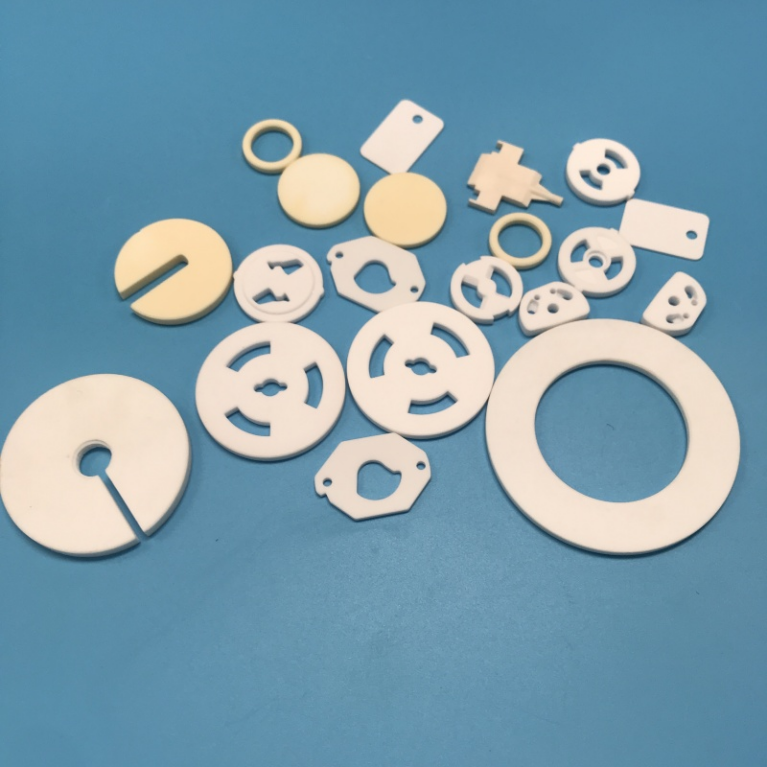
The term Industrial Ceramics encompasses a diverse family of engineered materials, each synthesized to deliver specific mechanical, thermal, and electrical properties. Selecting the correct formulation is the most critical step in successful implementation. You cannot simply swap steel for a generic ceramic; you must match the specific compound to the environmental stressor.
Alumina serves as the foundational material for most technical applications. Available in purity levels ranging from 92% to 99.9%, it offers an exceptional balance of mechanical strength, wear resistance, and electrical insulation. Higher purity levels increase corrosion resistance and dielectric strength. Common industrial applications include high-voltage electrical insulators, wear-resistant lining pads in material handling, and high-temperature furnace tubes. Its widespread availability and established manufacturing processes make it the most accessible entry point for upgrading from traditional metals.
Zirconia addresses the primary weakness of most ceramic materials: brittleness. Through a microstructural mechanism known as transformation toughening, Zirconia can absorb impact energy. When a micro-crack begins to form under stress, the crystal structure expands locally, effectively pinching the crack shut and preventing catastrophic failure. This unique property makes Zirconia the premier choice for high-impact and high-stress applications where other materials would chip or shatter. Typical use cases include industrial cutting blades, high-pressure pump valves, and wire extrusion dies.
Silicon Carbide is engineered for environments demanding extreme hardness and exceptional thermal management. It ranks just below diamond on the hardness scale, providing unparalleled resistance to abrasive and erosive wear. Furthermore, SiC exhibits high thermal conductivity and low thermal expansion, granting it excellent resistance to thermal shock. These properties make it indispensable in semiconductor processing equipment, mechanical seal faces for chemical pumps, and high-temperature kiln furniture.
Silicon Nitride offers an extraordinary combination of low density, high fracture toughness, and exceptional thermal shock resistance. Its extremely low coefficient of thermal expansion allows it to withstand rapid, severe temperature fluctuations that would destroy other materials. Si3N4 maintains its mechanical strength at elevated temperatures, making it ideal for high-speed precision bearings, automotive engine components, and specialized welding nozzles where dimensional stability under thermal stress is paramount.
Aluminum Nitride provides a rare and highly sought-after combination of properties: thermal conductivity approaching that of metallic aluminum paired with excellent electrical insulation. In modern manufacturing, particularly within the electronics and semiconductor sectors, dissipating heat while preventing electrical conductivity is a constant challenge. AlN is the material of choice for high-power electronic substrates, RF window assemblies, and advanced heat sinks requiring strict dielectric properties.
To assist engineering teams in the selection phase, the following matrix outlines the baseline properties of these core materials. Values are approximate and vary based on specific manufacturing processes and purity levels.
| Material | Vickers Hardness (GPa) | Max Operating Temp (°C) | Thermal Conductivity (W/m·K) | Fracture Toughness (MPa·m^1/2) |
|---|---|---|---|---|
| Alumina (99%) | 15 - 19 | 1,600 | 25 - 35 | 4.0 - 5.0 |
| Zirconia (YTZP) | 12 - 13 | 1,000 | 2 - 3 | 8.0 - 10.0 |
| Silicon Carbide (SSiC) | 22 - 28 | 1,650 | 120 - 150 | 3.5 - 4.5 |
| Silicon Nitride | 14 - 16 | 1,200 | 25 - 35 | 6.0 - 8.0 |
| Aluminum Nitride | 11 - 12 | 1,000 | 170 - 200 | 3.0 - 3.5 |
Integrating Advanced Ceramics into production equipment transforms baseline material properties into measurable manufacturing outcomes. Understanding how specific features translate to operational stability is essential for justifying engineering redesigns. You must look beyond the spec sheet and evaluate how the material behaves on the factory floor.
The extreme hardness of engineered materials directly combats abrasive and erosive wear in continuous production lines. Components such as guide rollers, slurry pump impellers, and grinding media face constant friction. Because materials like Silicon Carbide and Alumina are significantly harder than hardened tool steels, they resist surface degradation. This resistance maintains critical component geometries over vastly extended periods, ensuring consistent product quality and reducing the frequency of maintenance interventions.
In high-temperature environments, dimensional stability is a primary concern. Metals expand and warp when heated, leading to tolerance failures and mechanical binding. Advanced materials feature exceptionally low coefficients of thermal expansion. This characteristic ensures that components maintain their precise dimensions during rapid thermal cycling. Furnace components, welding fixtures, and high-temperature sensor housings rely on this stability to function accurately without structural deformation.
High-voltage and high-frequency manufacturing processes require robust electrical isolation. Metallic components present severe risks of electrical arcing and signal interference. Alumina and Aluminum Nitride provide high dielectric strength, effectively preventing current leakage and managing static dissipation. These properties are critical in semiconductor manufacturing equipment, electron microscopy, and high-power laser systems, where electrical interference can destroy sensitive components or compromise process integrity.
Chemical processing, semiconductor etching, and pharmaceutical manufacturing utilize aggressive acids, bases, and reactive gases that rapidly corrode standard alloys. Engineered materials are inherently inert to most chemical attacks. They do not rust, oxidize, or react with process media. This chemical stability prevents equipment degradation and eliminates the risk of metallic ions leaching into high-purity chemical streams, safeguarding the end-product from contamination.
Industries such as biopharmaceuticals and food processing operate under strict regulatory frameworks. The dense, non-porous microstructure prevents the harbor of bacteria and facilitates aggressive sterilization protocols. Materials like high-purity Alumina and Zirconia meet stringent FDA and USP Class VI standards. Furthermore, their high wear resistance prevents the generation of particulate matter, making them ideal for integration into cleanroom environments where airborne contamination must be strictly controlled.
Replacing a metal component with a ceramic equivalent is rarely a direct substitution. The unique mechanical properties and manufacturing processes of these materials require specific design adaptations and risk mitigation strategies to ensure successful deployment. Failure to adapt your CAD models will result in premature component fracture.
The geometry, production volume, and required tolerances of a component dictate the appropriate forming process. Dry pressing is highly efficient for simple, flat shapes in high volumes. Isostatic pressing provides uniform density for complex or massive components. Ceramic Injection Molding (CIM) accommodates intricate, highly detailed geometries but requires significant upfront tooling investment. Slip casting is utilized for hollow or large, thin-walled structures. Selecting the optimal forming method directly impacts the structural integrity and feasibility of the final part.
The primary engineering challenge when designing with these materials is their low tensile strength and inherent brittleness. Unlike metals, they do not yield or plastically deform before breaking; they fail catastrophically. Design guidelines must prioritize compressive loading over tensile or bending loads. Sharp internal corners act as stress concentrators and must be eliminated in favor of generous radii. Edges should incorporate proper chamfers to prevent chipping during assembly and operation. Transitioning from metal-centric design thinking to specific geometries is vital for component survival.
Eliminate sharp internal corners and use generous radii.
Design assemblies to place ceramic parts under compressive loads.
Incorporate edge chamfers to prevent chipping during handling.
Avoid point-loading by using compliant gaskets or soft metal shims.
Achieving precise dimensional tolerances requires specialized machining techniques. Post-sintering, or "hard machining," is performed using diamond-impregnated grinding wheels. This process is slow, technically demanding, and requires specialized equipment. To optimize production, manufacturers heavily rely on "green machining." This involves shaping the compacted powder before it is fired in the kiln. While green machining is significantly faster and more adaptable, engineers must account for the 15% to 20% shrinkage that occurs during the final sintering phase.
Integrating these components into metallic assemblies presents significant mechanical challenges, primarily due to the mismatch in coefficients of thermal expansion (CTE). If a part is rigidly fastened to a metal housing that expands rapidly under heat, the resulting stress will fracture it. Joining techniques must accommodate this differential. Active metal brazing creates strong, hermetic seals. Thermal shrink-fitting utilizes the expansion of metal to create a compressive hold on an insert. Mechanical fastening should utilize compliant layers, such as high-temperature polymers or soft metal gaskets, to distribute clamping forces evenly.
The manufacturing cycle is inherently multi-step and time-intensive. The sequence of powder preparation, pressing, green machining, high-temperature sintering, and final diamond grinding cannot be rushed without compromising material integrity. Consequently, lead times for custom components are generally longer than those for machined metals. Engineering and procurement teams must align on strategic inventory planning and prototype scheduling to prevent production delays during the transition phase.
Engineered materials are not a universal replacement for traditional metals and polymers. However, they represent a high-performance upgrade specifically targeted at operational bottlenecks where extreme heat, aggressive wear, chemical attack, or electrical interference cause chronic system failures. By leveraging the unique properties of these advanced materials, manufacturing facilities can stabilize highly volatile production processes.
Conduct a systematic failure analysis on current high-wear metal components to identify the exact mode of degradation.
Consult with a technical manufacturer to review existing CAD designs and modify them for compressive loading and proper radii.
Commission a small-batch, green-machined prototype to conduct real-world field testing in your specific production environment.
Establish a strategic inventory plan to account for the longer manufacturing lead times associated with sintering and diamond grinding.
A: Traditional ceramics utilize natural, mined clay and silica, resulting in porous structures with variable properties. Industrial ceramics are engineered from highly purified, synthetic mineral powders like aluminum oxide or silicon carbide. They undergo strictly controlled manufacturing and sintering processes to create dense, precise microstructures with predictable, high-performance mechanical and thermal properties.
A: Yes, post-sintering machining is possible but highly specialized. Because the fired material is exceptionally hard, it requires slow precision grinding using diamond-impregnated tooling. To optimize production efficiency, most shaping is done via green machining before the component is fired.
A: Operating temperatures depend entirely on the specific material formulation. Alumina can operate up to 1,600°C (2,912°F). Advanced materials like Silicon Carbide and Silicon Nitride maintain structural integrity and resist oxidation at temperatures exceeding 1,500°C, far surpassing the melting points of standard industrial metals.
A: Prevention relies on strict design adaptations. Engineers must design components to operate under compressive loads rather than tensile stress. Geometries must eliminate sharp internal corners, utilize generous radii, and include edge chamfers. Selecting high-fracture-toughness materials like Zirconia also mitigates chipping risks.
A: Joining requires managing the different thermal expansion rates between the two materials. Common techniques include active metal brazing for hermetic seals, thermal shrink-fitting to create compressive joints, and mechanical fastening using compliant gaskets to distribute stress and prevent localized fracturing.
A: Zirconia (Zirconium Dioxide) is the superior choice for impact resistance. It features a unique transformation-toughening mechanism where its crystal structure expands under stress, effectively closing micro-cracks before they propagate. This gives Zirconia the highest fracture toughness among technical ceramics.
A: Yes. Materials like high-purity Alumina and Zirconia are biologically inert, non-toxic, and feature dense, non-porous surfaces that do not harbor bacteria. They easily satisfy FDA regulations, USP Class VI standards, and stringent cleanroom requirements for pharmaceutical and food processing applications.