
Views: 0 Author: Site Editor Publish Time: 2026-08-04 Origin: Site


Engineers consistently rely on specialized materials when designing systems for extreme environments where standard polymers and metals rapidly degrade. High-temperature filtration, corrosive chemical processing, and advanced catalyst supports require structural components that maintain integrity under severe stress. Specifying the incorrect base material or pore structure introduces significant engineering risk. A mismatch can lead to catastrophic mechanical failure, thermal degradation, or highly inefficient fluid dynamics.
Selecting the right composition requires a rigorous evaluation framework. You must carefully match specific ceramic compositions and manufacturing methods to exact application requirements and operational stresses. Understanding the physical and chemical properties of these materials ensures long-term reliability and optimal performance in demanding applications. We evaluate these parameters to prevent system downtime and maintain process efficiency.
Material composition dictates limits: Alumina offers baseline versatility, Silicon Carbide (SiC) dominates high-temperature/corrosive environments, and Cordierite excels in thermal shock resistance.
The porosity-strength trade-off: Increasing pore volume exponentially decreases mechanical yield strength; material selection must balance permeability with structural integrity.
Manufacturing dictates morphology: The chosen production method (e.g., partial sintering vs. sacrificial templates) fundamentally alters pore interconnectivity and final application viability.
Accurate specification begins with mapping peak operating temperatures, continuous exposure limits, and thermal cycling frequencies. Thermal environments dictate the baseline material choice, as rapid temperature shifts induce thermal shock and potential fracturing. You must also identify chemical exposure risks. Determine whether the system will encounter extreme pH levels, aggressive organic solvents, or oxidizing gases at elevated temperatures. Finally, define the mechanical load profiles. Consider static compressive loads, dynamic pressure spikes, and potential vibrational stresses that the component will endure during operation. Field data shows that neglecting vibrational stress in high-flow gas lines often leads to premature micro-cracking.
When assessing the operating environment, engineers must document the exact chemical makeup of the fluid or gas stream. Trace elements, often overlooked in initial design phases, can accumulate and react with the ceramic matrix over time. For example, trace alkali metals in biomass gasification streams can severely degrade certain silica-based ceramics at high temperatures. We recommend deploying continuous monitoring sensors during pilot testing to capture transient temperature spikes that exceed the continuous exposure limits.
The relationship between open space and structural integrity is a fundamental engineering challenge. According to the Gibson-Ashby model for cellular solids, compressive and flexural strength decrease exponentially as porosity increases. Design frameworks must establish the minimum acceptable mechanical strength for load-bearing versus non-load-bearing applications. Material density and grain size play critical roles in mitigating micro-cracking under operational stresses. A denser matrix with optimized grain boundaries can support higher loads even when overall porosity is relatively high.
To navigate this trade-off, structural engineers utilize finite element analysis (FEA) to simulate stress distribution across the porous network. By modeling the exact pore architecture, we can identify localized stress concentrations where fractures are likely to initiate. Adjusting the sintering profile to promote grain growth at the strut intersections can significantly enhance the bulk modulus without sacrificing permeability. This approach is critical when designing components for high-pressure liquid filtration systems.
Pore structure dictates functionality. Open, interconnected porosity is strictly required for fluid flow and filtration applications. Conversely, closed porosity serves applications needing thermal and acoustic insulation. You must define the required pore size distribution, distinguishing between monodisperse and polydisperse structures. Pore throat diameter and tortuosity—the complexity of the path through the medium—directly control flow rates and filtration efficiency.
The internal geometry of the pore network also influences the physical trapping mechanisms during filtration. In depth filtration, a highly tortuous path increases the probability of particle interception and diffusion. However, excessive tortuosity leads to unacceptable pressure drops across the filter element. Engineers must optimize the pore throat-to-body ratio to maintain high flux rates while achieving the target retention efficiency. Advanced imaging techniques, such as X-ray microtomography, allow us to quantify these morphological parameters non-destructively.
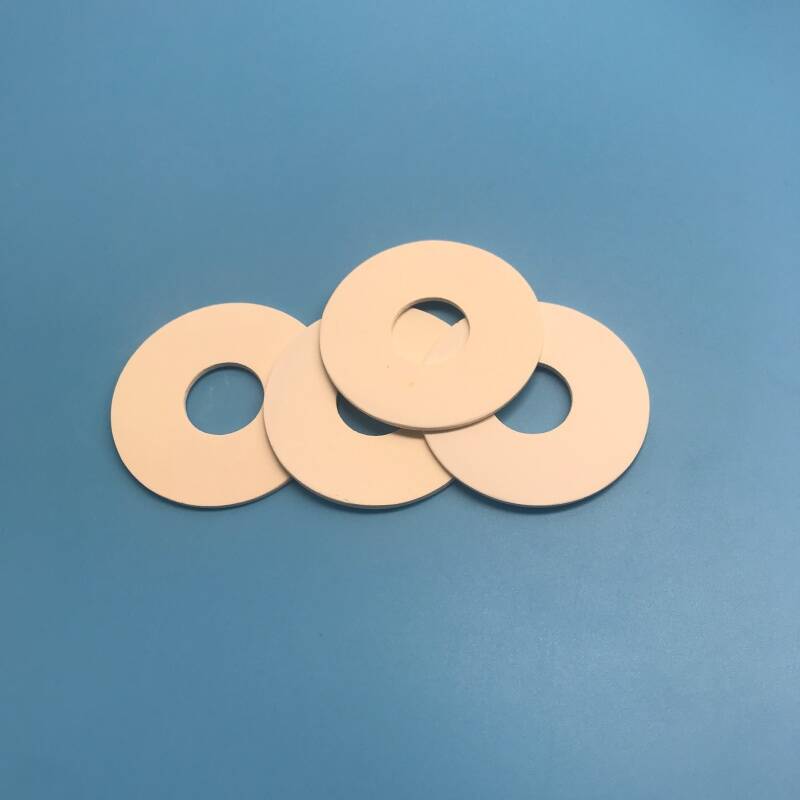
Alumina provides high hardness, excellent wear resistance, and outstanding chemical stability in acid and mild alkaline environments. It also features high electrical resistivity. These characteristics make it ideal for general-purpose industrial filtration, chemical catalyst supports, and gas diffusion. However, alumina is vulnerable to severe thermal shock and exhibits structural degradation when exposed to hydrofluoric acid or concentrated, hot alkaline solutions.
In practical applications, alumina components are often deployed in wastewater treatment facilities where chemical inertness is paramount. The material withstands aggressive backwashing cycles using dilute acids and bases. To mitigate its susceptibility to thermal shock, engineers design gradual heating and cooling protocols for systems utilizing alumina catalyst supports. This operational adjustment extends the component lifespan significantly.
Silicon Carbide delivers superior thermal conductivity, extreme temperature tolerance exceeding 1600°C, and low thermal expansion. It offers exceptional resistance to oxidation and acid corrosion. Common applications include diesel particulate filters, molten metal filtration, and high-velocity gas particulate removal. The primary limitations include high raw material costs, energy-intensive processing, and challenging machining requirements.
The deployment of SiC in molten iron filtration demonstrates its extreme capabilities. The material maintains structural integrity while submerged in liquid metal, effectively removing slag and non-metallic inclusions. Its high thermal conductivity ensures rapid heat transfer, preventing localized freezing of the melt within the filter structure. Machining SiC requires specialized diamond tooling, which necessitates near-net-shape manufacturing techniques to minimize post-firing processing.
Cordierite is defined by its exceptionally low coefficient of thermal expansion. This property yields unmatched resistance to rapid, extreme temperature fluctuations. It is the preferred material for automotive catalytic converter substrates, kiln furniture, and thermal regenerator cores. Despite its thermal advantages, cordierite has lower mechanical strength and poor chemical resistance to strong acids and bases compared to alumina and SiC.
The automotive industry relies heavily on cordierite for emissions control. The honeycomb structures endure rapid heating from ambient temperatures to over 800°C within seconds of engine startup. The low thermal expansion prevents the substrate from cracking under these severe gradients. However, engineers must protect cordierite components from chemical poisoning by fuel additives, which can degrade the ceramic matrix over prolonged exposure.
Mullite bridges the performance gap between alumina and cordierite. It provides excellent structural stability at high temperatures, low thermal conductivity, and high creep resistance under load. It is widely used for hot gas cleaning, ceramic kiln burners, and high-temperature furnace lining supports. However, mullite shows moderate chemical vulnerability in highly alkaline environments at elevated temperatures.
In industrial furnace applications, mullite supports maintain their dimensional stability under continuous heavy loads at temperatures exceeding 1300°C. This creep resistance prevents the sagging and deformation that would occur with standard alumina components. When specifying mullite for hot gas filtration, engineers must verify the absence of volatile alkali compounds in the gas stream to prevent premature chemical degradation.
Zirconia achieves high fracture toughness through transformation toughening. It features low thermal conductivity and excellent biocompatibility. Engineers specify zirconia for heavy-duty molten steel filtration, high-wear structural components, and oxygen sensors. Its high density increases component weight, and it faces phase destabilization risks in the presence of water vapor at elevated temperatures.
Transformation toughening allows zirconia to absorb energy and arrest crack propagation, making it suitable for high-impact environments. In molten steel filtration, zirconia filters withstand the immense metallostatic pressure and thermal shock during the initial pour. To prevent hydrothermal degradation in humid environments, manufacturers stabilize the zirconia matrix with yttria or magnesia, locking the crystal structure in its robust tetragonal phase.
Materials like diatomaceous earth feature a high natural silica content and a highly intricate natural microporous structure. They offer low thermal conductivity and highly cost-effective processing. These materials excel in municipal water purification, beverage clarification, and low-cost liquid filtration. Their primary limitations are very low mechanical strength and a low thermal limit, restricting them to mild operating conditions.
Brewing and winemaking industries utilize diatomaceous earth extensively for final clarification. The intricate skeletal remains of diatoms create a highly porous filter cake that traps microscopic yeast and bacteria. Because the material is mechanically weak, it is typically used as a consumable filter aid supported by a rigid metal or polymer screen. Careful handling is required to prevent the generation of hazardous silica dust during dry powder transfer.
Hydroxyapatite and calcium phosphates offer bioactivity, osteoconductivity, and a chemical composition resembling natural bone mineral phase. They are utilized for synthetic bone grafts, tissue engineering scaffolds, and drug delivery systems. These materials are extremely fragile with low load-bearing capacity, as they are strictly optimized for biocompatibility rather than mechanical durability.
In orthopedic applications, the interconnected porosity of HA scaffolds allows for cellular infiltration and vascularization. The material gradually resorbs into the body, replaced by natural bone tissue. Surgeons must handle these implants with extreme care, as their low compressive strength makes them susceptible to crushing during insertion. They are strictly limited to non-load-bearing sites or used in conjunction with metallic fixation devices.
Evaluating Porous Ceramic Materials requires a direct comparison of their operational limits. The table below outlines the primary parameters for standard compositions, providing a baseline for material specification.
| Material | Max Operating Temp (°C) | Thermal Shock Resistance | Chemical Resistance (pH) | Compressive Strength (MPa) | Primary Application |
|---|---|---|---|---|---|
| Alumina | 1400 - 1600 | Moderate | 2 - 12 | High | Liquid Filtration |
| Silicon Carbide | 1600+ | High | 1 - 14 | Very High | DPF / Molten Metal |
| Cordierite | 1200 | Very High | 4 - 10 | Low | Catalytic Converters |
| Mullite | 1500 | High | 3 - 11 | Moderate | Hot Gas Cleaning |
| Zirconia | 1700+ | Moderate | 2 - 13 | Very High | Molten Steel |
When comparing ceramics to sintered metal solutions like Stainless Steel 316L or Hastelloy, temperature limits are a primary differentiator. Ceramics excel beyond 500°C where metals oxidize or creep. Ceramics also provide superior resistance to hot, acidic, and highly oxidizing environments. However, sintered metals resist mechanical impact and shock loading, whereas ceramics are prone to sudden, catastrophic brittle fracture under impact.
The choice between ceramic and metal often comes down to the specific failure modes acceptable in the system design. In high-vibration environments, sintered metals offer ductility that prevents sudden failure. Conversely, in highly corrosive chemical synthesis reactors, metals will rapidly degrade, making ceramics the only viable option. Engineers must weigh the risk of brittle fracture against the necessity for chemical inertness.
Mapping Ceramic Filter Materials to specific filtration ranges is critical for system design. Macroporous structures (greater than 50 nm) handle coarse particulate filtration, molten metal filtration, and catalyst carrier structures. Mesoporous materials (2 to 50 nm) are used for microfiltration and ultrafiltration of biological fluids, wastewater, and industrial chemicals. Microporous structures (less than 2 nm) enable gas separation, molecular sieving, and specialized catalytic processes. Raw powder grain size selection and sintering temperature dictate the minimum achievable pore size.
Achieving precise pore sizes in the mesoporous and microporous ranges requires advanced manufacturing techniques. Sol-gel processing is frequently employed to deposit a thin, highly controlled microporous layer onto a coarser macroporous support. This asymmetric structure provides the necessary mechanical strength while delivering ultra-fine filtration capabilities. Strict control over the drying and calcination phases is required to prevent cracking in the active filtration layer.
Understanding fluid behavior through porous media requires applying Darcy’s Law for laminar flow and the Forchheimer Equation for turbulent flow. These calculations determine fluid pressure drops across the ceramic medium. Pore throat constriction, tortuosity, and surface roughness directly impact fluid flux and pumping energy requirements. Furthermore, surface charge (zeta potential) and surface chemistry influence physical fouling rates in liquid filtration systems.
Engineers must account for the transition from laminar to turbulent flow within the pore network, especially in high-velocity gas filtration. As velocity increases, inertial forces dominate, leading to a non-linear increase in pressure drop. Modifying the surface chemistry of the ceramic can mitigate fouling. For instance, applying a hydrophilic coating to an alumina filter reduces the adhesion of organic foulants in wastewater treatment, maintaining higher flux rates over extended operational cycles.
Rigorous testing ensures material reliability. Mercury Intrusion Porosimetry (MIP) determines pore size distribution and total open porosity. Capillary Flow Porometry, or the Bubble Point Test, identifies the largest active pore throat diameter and gas permeability. Gas Adsorption via the BET Method measures internal specific surface area, which is vital for catalyst support materials. Archimedes' Method remains the industry standard for verifying bulk density and total versus open porosity fractions.
Conduct MIP testing to establish the baseline pore size distribution and identify any structural anomalies.
Perform Bubble Point testing on every production batch to guarantee the maximum pore size meets filtration specifications.
Utilize BET analysis for catalyst supports to ensure sufficient surface area for active site deposition.
Apply Archimedes' Method to verify consistent bulk density, indicating uniform sintering across the component.
Industrial applications often face strict regulatory oversight. Food, beverage, and pharmaceutical processing require FDA-approved and USP Class VI compliant materials. ISO and ASTM testing standards, such as ASTM C373 for water absorption and bulk density, are utilized to verify pore size, mechanical integrity, and material purity before deployment.
Compliance documentation must trace the material from raw powder synthesis through final firing. Any deviation in the binder burnout profile can leave residual carbon, which compromises the chemical purity required for pharmaceutical applications. Regular audits of the manufacturing process and independent third-party testing are mandatory to maintain certification for these critical use cases.
Partial sintering involves the thermal bonding of ceramic powder particles without reaching complete densification. This process yields a narrow pore size distribution, a highly uniform structure, and high mechanical strength. However, it is generally limited to lower total porosities, typically ranging from 30% to 45%.
The control of the firing temperature and hold time is critical in partial sintering. If the temperature is too high, the material densifies excessively, closing off the open porosity required for filtration. If the temperature is too low, the neck formation between particles is insufficient, resulting in a weak structure that will crumble under operational stress. This method is highly effective for producing robust microfiltration tubes.
The replica template method coats an open-cell polymer sponge with ceramic slurry. The organic template is dried and burned out prior to sintering. This produces highly interconnected, open-cell structures with high porosity, often between 70% and 90%. The resulting low pressure drop makes this method ideal for high-flux liquid metal and gas filtration.
The rheology of the ceramic slurry must be precisely tuned to ensure uniform coating of the polymer struts without clogging the open cells. During the burnout phase, the heating rate must be carefully controlled to prevent the rapid expansion of organic gases from fracturing the fragile green ceramic structure. The final sintered foam exhibits a unique reticulated architecture that maximizes fluid interaction with the ceramic surface.
This method mixes ceramic powder with organic pore-forming agents like starches, polymers, or carbon black. These agents decompose cleanly during firing. The sacrificial fugitive method provides precise control over pore shape, size, and spatial distribution, allowing engineers to balance structural strength with desired pore volume.
By selecting specific fugitive materials, manufacturers can tailor the pore morphology. For example, using spherical polymer beads creates uniform, rounded pores, while using fibrous organic materials generates elongated, channel-like pores. The challenge lies in ensuring the complete burnout of the fugitive agents without leaving carbon residues that could alter the chemical properties of the final ceramic component.
Direct foaming incorporates gas directly into a ceramic suspension to create a wet foam, which is then dried and sintered. This technique allows for the creation of highly porous structures with varying pore sizes depending on the foaming agents and stabilization methods used. It is particularly useful for creating lightweight thermal insulation components.
Stabilizing the wet foam before drying is the primary technical hurdle in this process. Surfactants and setting agents are added to the slurry to prevent the gas bubbles from coalescing or collapsing. The resulting microstructure typically features a mix of open and closed pores, providing excellent thermal insulation properties while maintaining sufficient mechanical strength for handling and installation.
Map your exact operating temperature and chemical exposure limits before selecting a base ceramic composition.
Calculate the required mechanical strength and balance it against the necessary porosity to prevent structural failure.
Select a manufacturing method that produces the specific pore architecture required for your fluid dynamics or insulation needs.
Verify material specifications using standardized testing methods like MIP and Archimedes' Method.
A: Silicon Carbide (SiC) is frequently used for high-temperature applications. It withstands temperatures exceeding 1600°C and offers excellent thermal shock resistance and thermal conductivity.
A: As porosity increases, the mechanical strength of the ceramic decreases exponentially. More open space means less solid material available to bear loads, making highly porous ceramics more susceptible to fracture.
A: Open porosity features interconnected pores that allow fluids or gases to flow through the material, which is essential for filtration. Closed porosity consists of isolated pores that do not connect, making the material suitable for thermal or acoustic insulation.
A: Cordierite has an exceptionally low coefficient of thermal expansion. This property gives it outstanding resistance to thermal shock, allowing it to survive the rapid and extreme temperature changes found in automotive exhaust systems.
A: Pore size is typically measured using techniques like Mercury Intrusion Porosimetry (MIP) for size distribution, or Capillary Flow Porometry (Bubble Point Test) to determine the largest active pore throat diameter.