
Views: 0 Author: Site Editor Publish Time: 2026-07-30 Origin: Site


Finding materials that provide high permeability, extreme temperature resistance, and absolute chemical inertness is a persistent engineering challenge. Standard porous materials, such as polymers or sintered metals, fail under severe thermal shock, corrosive environments, or high mechanical loads. These failures lead to frequent component replacement, system downtime, and catastrophic structural collapse. When operating conditions push conventional materials past their limits, engineers must look to more robust alternatives. Porous Ceramics serve as the engineered solution for these extreme environments. By combining the inherent stability of advanced technical ceramics with precisely controlled void structures, these materials deliver reliable performance where others degrade. This guide helps engineers and procurement teams evaluate material compositions, manufacturing methods, and performance trade-offs to specify the correct ceramic structure for demanding applications.
Performance Baseline: Porous ceramics offer unmatched thermal stability (often exceeding 1,500°C) and chemical inertness compared to porous metals and polymers.
The Primary Trade-off: Engineers must balance porosity (permeability and surface area) against mechanical strength and structural integrity.
Application Versatility: Core use cases span molten metal filtration, catalyst supports, semiconductor processing, and biomedical implants.
Manufacturing Impact: The chosen manufacturing method (replica, sacrificial template, direct foaming, or partial sintering) dictates pore structure (open vs. closed cell, isotropic vs. anisotropic) and directly impacts scalability and unit cost.
The foundation of any porous ceramic component is its base material. You must match the chemical and thermal properties of the ceramic to the specific operating environment. Alumina (Al2O3) is widely used due to its excellent wear resistance, chemical stability, and cost-efficiency. It serves as the default choice for many filtration and structural applications where extreme thermal shock is not the primary failure mode. Zirconia (ZrO2) offers higher fracture toughness. Engineers frequently deploy it in environments requiring resistance to extreme mechanical stress and high temperatures, such as molten steel filtration.
Silicon Carbide (SiC) stands out for its exceptional thermal conductivity and thermal shock resistance. This makes it ideal for high-temperature gas filtration and catalyst supports. Cordierite is another staple, particularly in automotive emission control, due to its extremely low coefficient of thermal expansion. Silicon Nitride (Si3N4) provides superior fracture toughness and thermal shock resistance. We utilize it in high-stress structural components where sudden temperature fluctuations are common.
| Material | Primary Advantage | Common Application | Thermal Shock Resistance |
|---|---|---|---|
| Alumina (Al2O3) | Wear resistance, chemical stability | Liquid filtration, vacuum chucks | Moderate |
| Zirconia (ZrO2) | High fracture toughness | Molten steel filtration | High |
| Silicon Carbide (SiC) | Thermal conductivity | Hot gas filtration, DPFs | Very High |
| Cordierite | Low thermal expansion | Catalytic converters | Excellent |
| Silicon Nitride (Si3N4) | Fracture toughness, strength | High-stress structural parts | Very High |
Porous structures are classified by how their internal voids interact. Open-cell, or reticulated, structures feature interconnected pores that create continuous channels through the material. This configuration is essential for fluid flow, filtration, and catalyst support. You need open-cell structures when maximizing contact between the passing medium and the ceramic surface is required. The continuous network allows liquids and gases to pass through with measurable pressure drops.
Closed-cell structures consist of isolated pores trapped within the ceramic matrix. Because fluids cannot pass through them, these materials are designed for thermal insulation, acoustic dampening, and creating lightweight structural components. The trapped air or gas acts as an excellent insulator. We see these used extensively in furnace linings and aerospace applications where blocking heat transfer is the primary goal.
Hierarchical porosity combines multiple pore classifications within a single component. These structures feature co-existing macro-, meso-, and micro-pores. Engineers design them to optimize both mass transport through the larger channels and localized surface area interactions within the smaller voids. This is highly effective in advanced catalytic and electrochemical applications where you need bulk flow and high reaction surface areas simultaneously.
Pore size directly dictates the functional capability of the ceramic. Macro-porous materials feature pores larger than 50 nm. We use these for bulk fluid flow and particulate filtration. Meso-porous materials have pores ranging from 2 to 50 nm. These are often used in fine filtration and localized chemical reactions. Micro-porous materials contain pores smaller than 2 nm. You will find these utilized in gas separation and molecular sieving applications.
Uniform pore size distribution is critical for predictable filtration and fluid dynamics. A narrow pore size distribution ensures consistent pressure drops and reliable retention of target particles. If the pore sizes vary wildly, you risk channeling, where fluid bypasses the intended filtration paths. Key geometrical metrics include specific surface area (measured in m2/g), which defines the available area for chemical reactions. Total porosity volume percentage indicates the void fraction. Tortuosity measures the complexity and winding nature of the path a fluid must take through the ceramic channels.
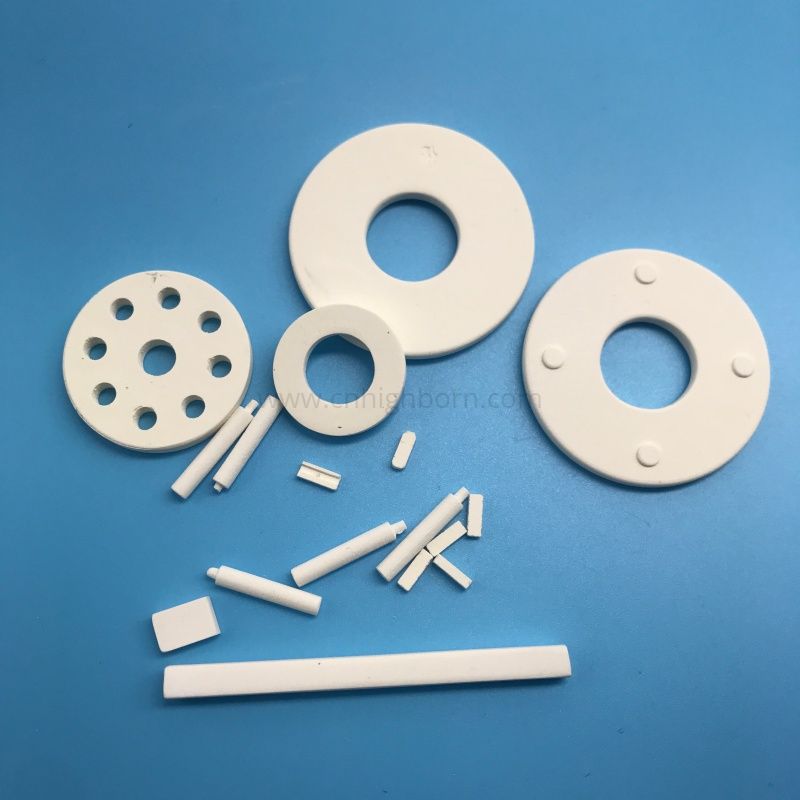
Porous ceramics are specified primarily for their survival in aggressive conditions. They maintain structural integrity in highly oxidative and reducing atmospheres where metals would rapidly oxidize or embrittle. In corrosive environments, such as concentrated acidic or alkaline streams, materials like alumina and silicon carbide exhibit near-zero degradation rates. You can deploy them in chemical processing plants where polymer filters would dissolve within minutes.
Thermal shock resistance is a vital metric. Components must withstand rapid heating and cooling cycles without cracking. This resistance is heavily influenced by the material's maximum operating temperature and its coefficient of thermal expansion (CTE). Materials with a low CTE, like cordierite, experience minimal dimensional change during temperature spikes. This drastically reduces internal thermal stresses, preventing catastrophic failure during sudden temperature shifts.
Designing with these materials requires managing the inverse relationship between void fraction and mechanical strength. As the porosity percentage increases to improve permeability or reduce weight, the compressive and flexural strength of the component decreases. Less solid material means less load-bearing capacity. You cannot have maximum porosity and maximum strength simultaneously.
The Gibson-Ashby model for cellular solids provides a mathematical framework for predicting this mechanical behavior based on relative density. It allows engineers to estimate how a specific pore structure will yield or fracture under stress. Additionally, the Weibull modulus is used to evaluate the statistical variability of ceramic fracture strength. A higher Weibull modulus indicates a more predictable and consistent material. This is critical when designing structural components that must not fail under specified loads.
For open-cell structures, evaluating the pressure drop across the porous media is essential. Darcy’s Law is utilized to model fluid flow through ceramic filters. It establishes the relationship between flow rate, fluid viscosity, and the pressure differential. Pore tortuosity heavily impacts these flow rates. A highly tortuous path increases resistance and pressure drop, requiring more pump energy to move fluids through the system.
When dealing with high-velocity gas or liquid flows, Darcy's Law becomes insufficient due to inertial effects. In these cases, the Forchheimer equation is applied to account for non-linear fluid flow and inertial losses within highly porous ceramic structures. Understanding these dynamics ensures the selected ceramic provides adequate flow without causing excessive backpressure in the system. You must calculate these values accurately to size pumps and blowers correctly.
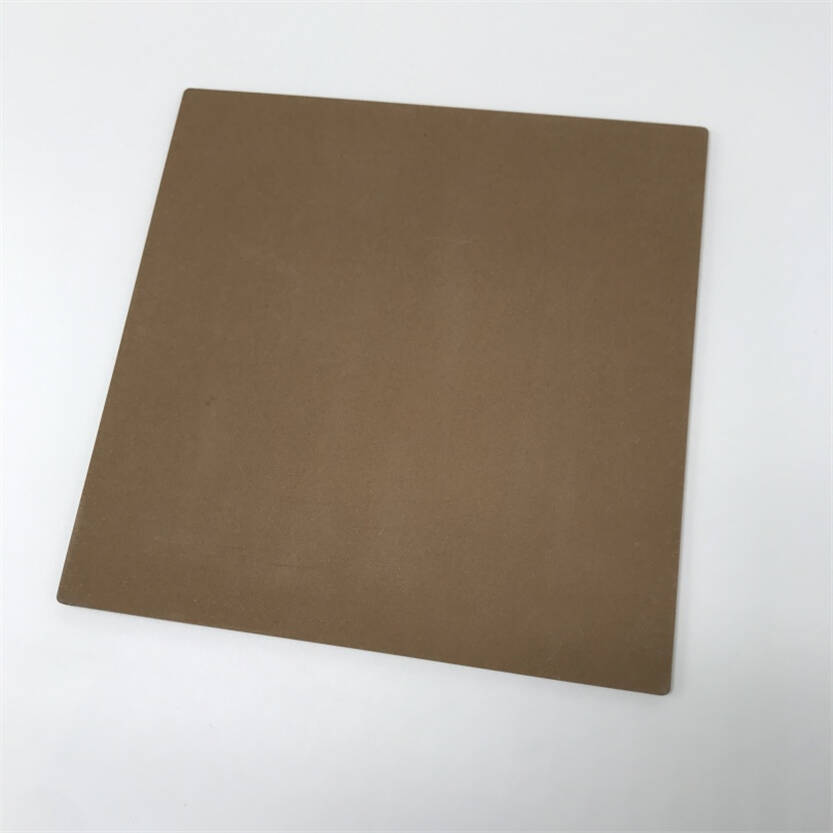
The versatility of these materials allows them to solve problems across multiple heavy industries. Porous Ceramic Applications generally fall into categories requiring extreme durability under stress. We see them replacing traditional materials in areas where failure is not an option.
In foundries, molten metal filtration relies heavily on SiC and zirconia foams. These filters remove non-metallic inclusions and slag from molten aluminum, iron, and steel. This ensures the structural integrity of the final cast parts. The ceramics must withstand the immense thermal shock of molten metal pouring directly onto them at temperatures exceeding 1,500°C.
For hot gas and liquid filtration, porous ceramics are used in high-temperature particulate removal. We use them for fly ash filtration in power generation facilities. They are also deployed in cross-flow microfiltration systems handling aggressive chemical processing environments. In these applications, polymer membranes would melt or dissolve, but ceramics maintain their pore structure and filtration efficiency.
Automotive emission control is a massive application area. Cordierite and silicon carbide honeycombs form the core of catalytic converters, Diesel Particulate Filters (DPFs), and Gasoline Particulate Filters (GPFs). The ceramic provides a stable, high-temperature substrate for active catalyst washcoats. They survive the harsh environment of an exhaust system for hundreds of thousands of miles.
These structures offer the high surface-area-to-volume ratios required for efficient chemical synthesis, industrial gas scrubbing, and Volatile Organic Compound (VOC) abatement. The interconnected pores ensure maximum contact time between the exhaust gases and the catalytic agents. This maximizes the conversion of harmful pollutants into inert gases.
The semiconductor industry requires absolute precision and purity. High-purity alumina porous ceramics are extensively used to manufacture vacuum chucks. These chucks hold delicate silicon wafers uniformly during lithography, grinding, and dicing processes. The microscopic, uniform porosity allows for an even distribution of vacuum pressure.
This secures the wafer without inducing localized mechanical stress, warping, or particle contamination. Traditional metal chucks can scratch the wafers or introduce metallic contaminants. Alumina provides a clean, flat, and stable surface that meets the strict tolerances of modern semiconductor manufacturing.
Advanced energy systems leverage the permeability and conductivity profiles of specific ceramics. Porous ceramic membranes function as electrodes and interconnects in Solid Oxide Fuel Cells (SOFCs) and Solid Oxide Electrolyzer Cells (SOECs). The porous structure facilitates necessary gas diffusion while supporting ion transport across the cell.
Furthermore, porous ceramic separators are being integrated into next-generation solid-state batteries. They prevent dendrite growth while allowing ionic movement. This significantly improves battery safety and lifespan by eliminating the flammable liquid electrolytes used in traditional lithium-ion batteries.
Closed-cell porous ceramics are exceptional insulators. They are used to manufacture kiln furniture, high-temperature furnace linings, and aerospace heat shields. The tiles used on space shuttles are a classic example. The trapped air within the closed pores prevents conductive heat transfer.
The ceramic matrix withstands direct exposure to extreme heat sources. We use these materials to line industrial furnaces, reducing energy consumption by keeping the heat contained within the firing chamber. They are lightweight, which reduces the thermal mass of the kiln cars, allowing for faster heating and cooling cycles.
In the medical field, biocompatible ceramics like hydroxyapatite (HA), tricalcium phosphate (TCP), and porous alumina are used for bone grafts and orthopedic implants. The body does not reject these materials. They provide a scaffold for new bone growth.
The pore sizes are strictly controlled, typically between 100 and 400 µm. This specific size range facilitates osteoconduction—the ingrowth of natural bone tissue—and vascularization. Blood vessels can grow through the pores, ensuring the implant integrates seamlessly with the patient's body and becomes a permanent part of the skeletal structure.
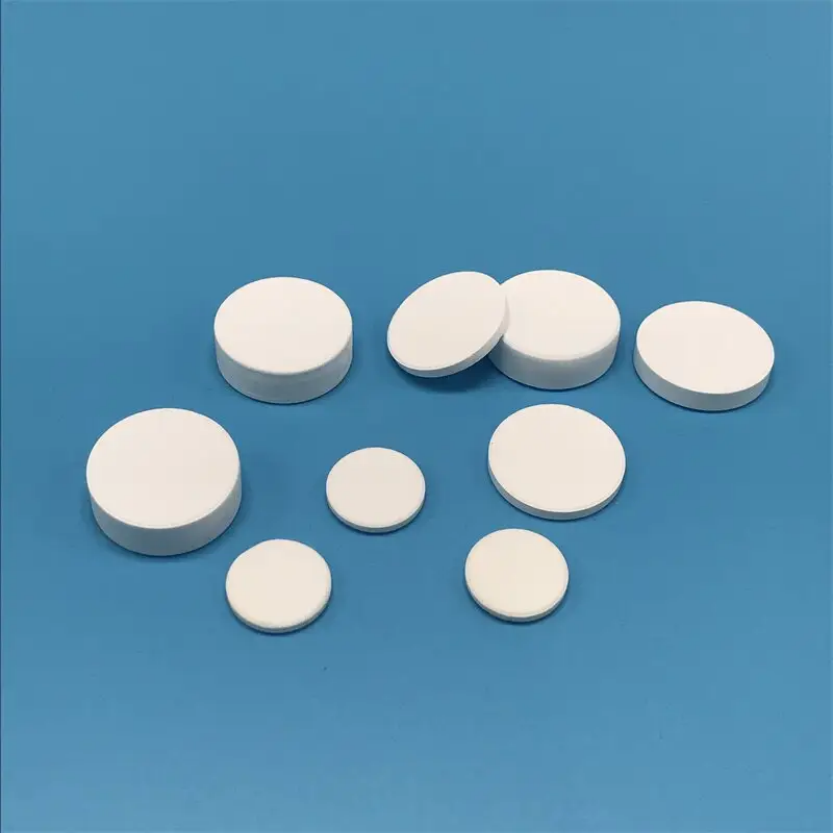
The manufacturing process dictates the final pore architecture. Partial sintering involves processing ceramic powders at lower temperatures or for shorter durations than fully dense ceramics. This allows the particles to bond at their contact points (necking) while leaving the natural interstitial voids between the particles intact. You control the porosity by adjusting the initial particle size and the sintering profile.
This method provides excellent mechanical strength and highly predictable pore sizes. It is ideal for precision filtration components. However, it is generally limited to lower overall porosity levels, typically capping around 40-50%. For applications requiring higher void fractions, alternative methods are required. Partial sintering is highly scalable and cost-effective for producing large volumes of simple shapes like tubes and plates.
When you need high porosity (up to 90%), replica templating is the standard method. A polyurethane foam sponge is soaked in a ceramic slurry. The sponge is then squeezed to remove excess slurry, leaving a coating on the polymer struts. During firing, the polymer sponge burns away, and the ceramic coating sinters, leaving a highly porous, reticulated ceramic foam. This is how molten metal filters are made.
Direct foaming involves injecting a gas into a ceramic suspension to create bubbles. The foamed slurry is then dried and sintered. This method allows for the creation of both open and closed-cell structures depending on the formulation. It offers good control over pore size and is useful for creating lightweight insulating bricks and structural components.
Define the maximum operating temperature and chemical exposure to select the appropriate base material.
Determine the required flow rate and allowable pressure drop to establish the necessary pore size and open-cell void fraction.
Calculate the mechanical load the component will bear to ensure the chosen porosity level does not compromise structural integrity.
Consult with manufacturers to match your required pore architecture with the most scalable production method.
A: The maximum temperature depends on the specific material. Alumina operates up to 1,600°C. Silicon Carbide and Zirconia withstand temperatures exceeding 1,800°C to 2,000°C depending on the atmosphere and structural load.
A: Ceramic filters are regenerated through thermal burn-off (calcination) to remove organic contaminants. You can also use chemical backwashing with strong acids or alkalis that would destroy metal or polymer filters.
A: Open-cell ceramics have interconnected pores allowing fluids and gases to pass through, making them ideal for filtration. Closed-cell ceramics have isolated, sealed pores that trap air, making them excellent thermal insulators.
A: Cordierite has an extremely low coefficient of thermal expansion. This allows it to survive the rapid, extreme temperature changes of automotive exhaust systems without cracking from thermal shock.
A: Yes, but it requires specialized diamond tooling. Because ceramics are extremely hard and brittle, machining is often performed in the green or bisque state before final sintering to reduce costs.
A: Porosity and mechanical strength have an inverse relationship. As the percentage of void space increases, the compressive and flexural strength of the ceramic decreases significantly due to the reduction in solid load-bearing material.