
Views: 0 Author: Site Editor Publish Time: 2026-08-01 Origin: Site


Maintaining filtration integrity in aggressive industrial environments presents a persistent engineering challenge. Extreme temperatures, high pressure, and corrosive chemicals routinely push conventional filtration systems beyond their limits. When polymeric membranes degrade or metallic filters corrode, operations suffer from unplanned downtime and frequent replacement cycles. These failures disrupt production schedules and impact operational efficiency. To solve these specific failure points, engineers turn to specialized material classes engineered for extreme conditions. Porous Ceramic Filters offer a robust alternative, providing exceptional thermal stability and chemical inertness. Understanding how Ceramic Filtration functions helps determine when it justifies the capital investment. We will explore the technical mechanisms, material properties, and industrial applications of these systems to provide a clear framework for deployment in harsh processing environments.
Porous ceramic filters operate primarily through cross-flow and dead-end filtration mechanisms, utilizing highly controlled pore size distributions, void volumes, and tortuosity to achieve precise separation.
The primary operational advantages are extreme thermal stability (often exceeding 1000°C), thermal shock resistance, and broad-spectrum chemical inertness across the entire pH spectrum (0–14).
Successful implementation requires mitigating material brittleness through specialized housing designs, elastomeric/graphitic gaskets, and strict installation protocols.
Depth filtration relies on a tortuous path to capture particles. The complex, interconnected three-dimensional pore network traps contaminants through mechanical entrapment and capillary action. Tortuosity factors dictate the efficiency of this process, ensuring particles navigate a winding route before exiting the matrix. In field applications, such as capturing fine catalyst dust from a reactor exhaust, this depth matrix prevents premature blinding of the filter element. Engineers calculate the void fraction to ensure the media can hold sufficient particulate mass before requiring a backwash cycle.
Surface filtration, or cake filtration, operates differently. Particles larger than the surface pore size accumulate, forming a permeable filter cake layer. This layer acts as an auxiliary filtration barrier, enhancing separation efficiency over time. Fluid dynamics govern permeability, with Darcy’s Law explaining liquid and gas flux through the ceramic matrix. Operating pressure, fluid viscosity, membrane thickness, and hydrodynamic resistance all influence overall performance. Operators monitor the differential pressure across this cake to trigger automated cleaning sequences.
Dead-end filtration suits low-solid feed streams. Particulates accumulate directly on the filter surface, leading to predictable pressure drops. This configuration requires periodic backwashing to clear the accumulated cake and restore flow rates. It works best in polishing applications where the total suspended solids remain below 100 parts per million.
Cross-flow filtration manages high-solids applications effectively. Fluid sweeps parallel to the ceramic membrane surface, generating shear forces. These forces continuously limit cake layer thickness, maintaining stable permeate flux and extending operational cycles between cleanings. High-velocity pumps maintain the cross-flow velocity, typically between 3 and 6 meters per second, to prevent severe fouling.
| Parameter | Dead-End Filtration | Cross-Flow Filtration |
|---|---|---|
| Flow Direction | Perpendicular to membrane | Parallel to membrane |
| Solids Handling | Low (Polishing) | High (Slurries, Emulsions) |
| Energy Consumption | Lower (Feed pump only) | Higher (Recirculation pump required) |
| Fouling Rate | Rapid accumulation | Controlled by shear forces |
Controlled thermal sintering bonds ceramic particles, dictating the final pore network. Sacrificial pore-forming agents, known as porogens, help achieve targeted porosity percentages and void volumes. This precise engineering ensures consistent filtration performance. The firing temperature, often exceeding 1500°C, fuses the grain boundaries to create a rigid, unyielding structure.
Asymmetric membrane design features a multi-layered structural architecture. A thick, highly permeable macroporous support layer provides mechanical strength. One or more thin, finely controlled microporous or ultrafiltration active layers coat this support, minimizing flow resistance while ensuring sharp molecular weight cut-offs. This gradient structure prevents internal pore plugging.
The bubble point test verifies the integrity and maximum pore size of ceramic filtration elements. Based on capillary pressure physics, this method ensures the filter meets strict operational standards before deployment. Technicians submerge the element in a wetting fluid and slowly increase gas pressure until the first continuous stream of bubbles appears.
Quality assurance protocols use wetting liquids and pressurized gas to identify structural defects, bypass microcracks, or manufacturing anomalies. This rigorous testing guarantees reliable performance in demanding industrial environments, preventing catastrophic bypass during critical processing phases.
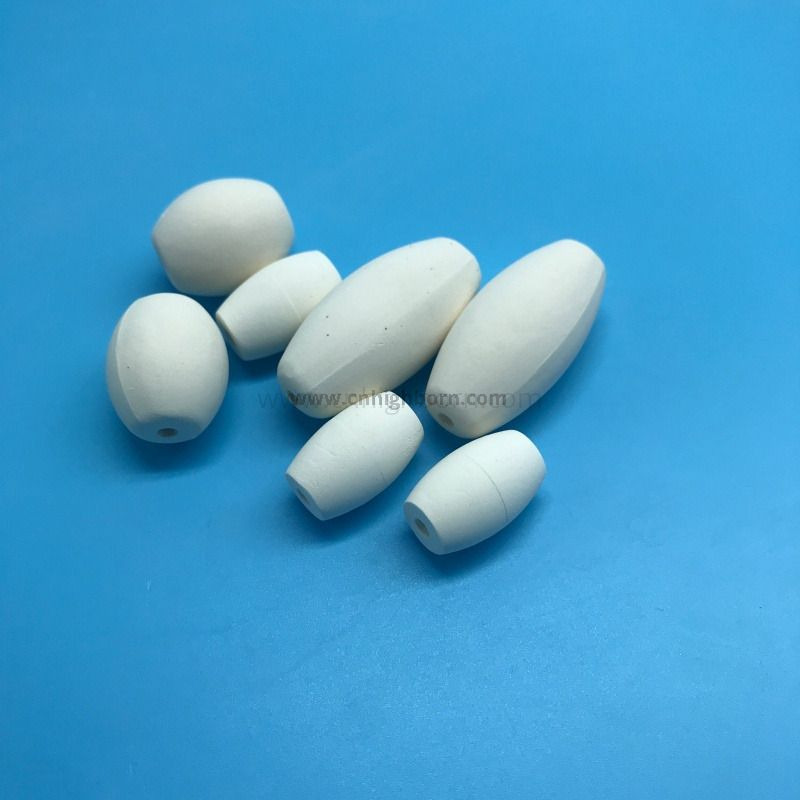
Alumina remains the industrial standard for many applications. It balances mechanical strength, hardness, and cost-effectiveness in standard acidic and alkaline environments. Plant managers frequently specify alumina for baseline wastewater treatment and standard chemical processing where extreme pH fluctuations are rare.
Silicon Carbide offers superior thermal conductivity and exceptional thermal shock resistance. Its extreme hydrophilicity makes it highly resistant to organic fouling. Engineers deploy silicon carbide in produced water treatment and oil-water separation, where its surface properties actively repel oil droplets.
Zirconia provides chemical stability in highly corrosive, high-temperature alkaline applications. It excels in fine ultrafiltration ranges. Its high fracture toughness makes it suitable for high-pressure systems where mechanical stress could compromise weaker ceramics.
Titania features unique surface charge properties and photocatalytic potential. High chemical resistance makes it ideal for food, beverage, and advanced water purification processes. Its smooth surface finish allows for aggressive chemical cleaning without degrading the active filtration layer.
| Material | Thermal Shock Resistance | Chemical Resistance | Primary Application |
|---|---|---|---|
| Alumina | Moderate | Good (pH 2-12) | General industrial wastewater |
| Silicon Carbide | Excellent | Excellent (pH 0-14) | Oil-water separation, harsh chemicals |
| Zirconia | Good | Excellent (Alkaline) | High-pressure ultrafiltration |
| Titania | Good | Excellent (Broad) | Food, beverage, biopharma |
Ceramic filters exhibit exceptional thermal limits in high-temperature gas and liquid streams. Unlike polymers, they do not soften, and unlike metals, they resist creep at temperatures exceeding 1000°C. This stability enables continuous operation in extreme environments, such as incinerator exhaust stacks and syngas purification lines.
Hot-gas filtration benefits significantly from these properties. Fly ash removal and catalyst recovery occur without upstream cooling loops. The ability to withstand repeating steam-in-place cycles ensures reliable in-situ sterilization for pharmaceutical and food-grade processes.
Extreme pH tolerance defines ceramic filtration media. The material resists strong acids like sulfuric and hydrochloric acid, as well as strong bases like sodium hydroxide. Polymeric membranes often suffer hydrolytic degradation or swelling under similar conditions, leading to pore enlargement and loss of separation efficiency.
Solvent compatibility extends to aggressive organic solvents, hydrocarbons, and chlorinated compounds. Where polymer binders dissolve or lose mechanical integrity, ceramics maintain their structural stability and filtration efficiency. This makes them the default choice for petrochemical solvent recovery systems.
A rigid pore structure prevents compaction, deformation, or shifting under high transmembrane pressure. The high Young's modulus of ceramics guarantees consistent separation efficiency, regardless of process pressure spikes. Operators can push higher flow rates through the system without risking membrane collapse.
Hard ceramic phases resist erosion from abrasive, high-solid particulate slurries. This abrasion resistance ensures a long operational lifespan even in demanding slurry processing applications, such as mining tailings recovery and titanium dioxide pigment washing.
Multi-channel tubular designs optimize high-velocity cross-flow systems. Industrial stainless steel, titanium, or fiber-reinforced plastic pressure vessels seal these tubes securely, ensuring robust performance in high-volume slurry applications. The internal channels range from 2mm to 8mm in diameter, depending on the viscosity and solid loading of the feed stream.
Monolithic geometries feature high surface-area-to-volume ratios. These high-packing density structures primarily serve gas-phase applications, emission controls, and high-throughput catalytic support. The square or hexagonal channels minimize pressure drop while maximizing contact area for gas-solid separation.
Ceramic foams utilize a reticulated open-cell tortuous structure. Metallurgical and foundry applications rely on their high thermal shock resistance to capture dross, slag, and non-metallic inclusions during molten metal filtration. Foundry workers place these foams directly in the gating system to ensure clean castings.
Submerged systems often employ flat-sheet ceramic configurations. Membrane bioreactors and wastewater treatment facilities benefit from high packing density, low energy consumption, and resistance to biological fouling. Air scouring from the bottom of the tank keeps the flat sheets clean during continuous operation.
Ceramic media, specialized high-pressure housings, and robust sealing systems require a higher initial investment relative to polymer modules. However, long-term projections model savings over a 10-to-15-year operational lifespan. Reduced element replacement frequency, minimized system downtime, lower cleaning chemical consumption, and higher permeate yield offset the initial costs. Plant managers must evaluate the lifecycle benefits rather than focusing solely on the upfront procurement budget.
Chemical clean-in-place protocols use highly concentrated acids, bases, and oxidizing agents for chemical regeneration without degrading the membrane matrix. Physical cleaning involves high-pressure backpulsing to instantaneously dislodge surface cake layers, restore flux, and maintain low average operating pressures. High-temperature burn-off methods volatilize organic foulants that resist chemical cleaning, restoring the ceramic to its original factory condition.
Low tensile strength and susceptibility to mechanical shock require careful engineering. Vibration-damping elastomeric or graphite gaskets and spring-loaded compression housings mitigate brittle fracture risks. Defining thermal shock limits and detailing operational heating/cooling ramp rates prevent catastrophic cracking. Operators must program PLCs to enforce strict temperature gradients during startup and shutdown sequences.
Separating high-value noble metal catalysts from aggressive reaction mixtures requires robust filtration. Systems designed to clean and recycle concentrated process acids and industrial lyes rely on ceramic media for consistent performance. The ability to operate at reaction temperatures eliminates the need for energy-intensive cooling and reheating steps.
The hydrophilic nature of ceramic membranes enables efficient oil-water emulsion splitting without rapid oil fouling. Treating mining tailings, metal plating rinse waters, and semiconductor chemical mechanical planarization slurries demonstrates their effectiveness in heavy metal and abrasive slurry removal. Facilities achieve strict environmental discharge limits using these reliable barriers.
Juice clarification, beer filtration, and dairy protein concentration benefit from precise separation. FDA compliance, USP Class VI requirements, and the ability to undergo daily steam sterilization maintain aseptic process environments. The inert nature of the ceramic ensures no flavor scalping or chemical leaching occurs during production.
Execute bench-scale or pilot-scale testing to generate application-specific flux decline curves and identify fouling behavior before designing full-scale installations.
Collaborate with application engineers to determine the optimal base material, pore size, and housing configurations based on your specific fluid dynamics.
Program your control systems to enforce strict heating and cooling ramp rates to protect the ceramic elements from thermal shock.
Establish a routine backpulsing and chemical clean-in-place schedule to maintain optimal transmembrane pressure and extend operational lifecycles.
A: Porous ceramic filters typically last 5 to 15 years, significantly outperforming polymer alternatives. This lifespan depends on avoiding severe mechanical impact and adhering to recommended thermal ramp limits during operation.
A: Cleaning involves a multi-tiered approach. Physical backpulsing dislodges surface debris. Intensive clean-in-place protocols use concentrated acids, bases, or oxidizers. Thermal burn-off addresses stubborn carbonaceous or biological fouling.
A: Ceramic filters offer superior thermal limits, broader chemical resistance, and physical rigidity under pressure compared to polymers. They withstand aggressive cleaning and extreme environments where polymers would melt, swell, or degrade.
A: Yes, porous ceramics excel in hot-gas filtration. They effectively capture fly ash and recover catalysts in high-temperature environments without requiring upstream cooling loops, improving overall thermal efficiency.
A: Absolutely. Ceramic filters meet strict sanitary compliance standards, including FDA and USP Class VI requirements. They withstand daily steam sterilization, making them ideal for clarification and concentration processes.