
Views: 0 Author: Site Editor Publish Time: 2026-11-04 Origin: Site


Is heat destroying your RF designs? Thermal management remains a massive bottleneck in modern electronics. Devices continue to shrink. Power densities surge simultaneously. Therefore, dissipating thermal energy is often the dividing line between a successful design and a catastrophic failure. Traditional Alumina frequently fails under these high-power conditions. The result is thermal runaway and degraded signals.
A BeO ceramic substrate solves this critical problem. In this comprehensive guide, we will explore exactly why this advanced material outperforms traditional solutions. We will compare BeO and Alumina directly. Let us dive into the physical properties that make this ceramic an indispensable asset for high-frequency applications.
Superior Heat Dissipation: A BeO ceramic substrate offers a thermal transfer rate nearly 10 times higher than standard Alumina. This makes it highly efficient for demanding high-power RF devices.
Optimized for High Frequencies: Featuring a remarkably low dielectric constant, this material minimizes signal loss. It preserves the integrity of delicate microwave transmissions.
Cost vs. Performance: Alumina presents a lower initial procurement cost. However, the long-term reliability and system-level miniaturization unlocked by BeO yield a far better return on investment.
Safe Handling: Industrial safety regulations regarding manufacturing dust are strict. Despite this, finished solid BeO components are completely safe to handle and integrate into electronic assemblies.
At its core, a BeO Substrate is an advanced technical component manufactured primarily from Beryllium Oxide. Within materials science, this specific compound is highly regarded for a rare combination of physical and electrical properties. Engineers utilize these solid plates as the foundational base for mounting delicate electronic components in high-stress environments.
The defining characteristic of this material is a physical paradox. It conducts heat with an efficiency comparable to elemental metals like aluminum or copper. Yet, it simultaneously acts as a premium electrical insulator. Most materials that conduct heat well also conduct electricity. Typical insulators trap heat. Beryllium Oxide breaks this conventional rule. It offers a unique dual-functionality.
Because of this specific trait, it has become highly sought-after in sectors where failure is not an option. Aerospace engineering, telecommunications infrastructure, and military radar electronics rely heavily on these substrates. They maintain stable operations when subjected to extreme thermal loads.
Modern radio frequency design is currently colliding with a severe physical limitation. The heat problem is real. The industry aggressively pushes for smaller form factors alongside higher power outputs. Components like high-power transistors generate massive amounts of localized thermal energy. The power density in today's modules has reached levels where basic aluminum heat sinks are no longer sufficient.
Looking at recent telecommunications developments, the aggressive rollout of millimeter-wave 5G networks and low-Earth orbit satellite constellations has fundamentally altered thermal budgets. Industry data shows a massive shift toward high-power Gallium Nitride amplifiers. These devices handle immense power but run exceptionally hot. Consequently, the market is moving away from traditional cooling methods. Designers are now forcing advanced passive thermal management directly at the board level to keep systems viable.
The consequences of poor heat management are severe. When energy is not efficiently pulled away from active components, the system risks thermal runaway. This destructive feedback loop causes rising temperatures and increased current draw. Even before catastrophic failure occurs, excessive heat causes signal distortion and drastically shortens component lifespan.
In these dense architectures, the circuit board acts as the primary thermal bridge. Exceptional Thermal Conductivity is a strict design requirement. If the base material cannot move heat away fast enough, the entire cooling system fails.
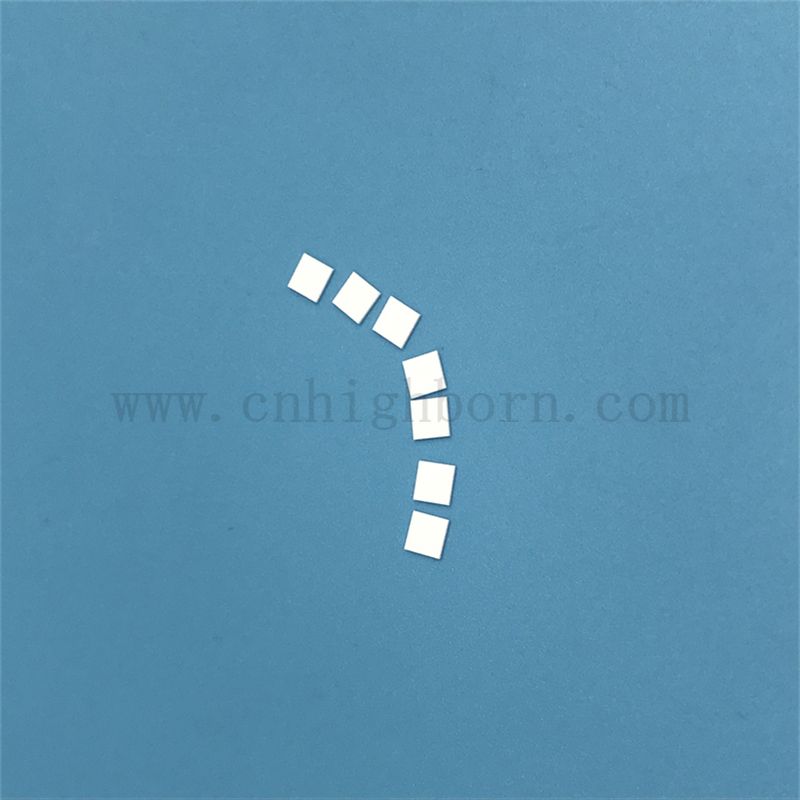
To truly understand why engineers specify advanced ceramics, we must conduct a direct Alumina Comparison. Aluminum Oxide has been the default industry standard for decades. However, it exhibits distinct physical limitations under extreme loads.
| Property | Standard Alumina 96% | Beryllium Oxide BeO | Impact on RF Design |
|---|---|---|---|
| Thermal Conductivity | 20 to 25 W/m·K | 250 to 300 W/m·K | BeO prevents thermal runaway in high-power GaN devices. |
| Dielectric Constant at 1 MHz | 9.0 to 9.8 | 6.5 to 6.7 | Lower value in BeO minimizes signal loss at microwave frequencies. |
| Coefficient of Thermal Expansion | 8.0 ppm/°C | 9.0 ppm/°C | Both offer reliable mechanical stability for semiconductor mounting. |
Specifically, the most critical metric in high-power electronics is the rate of heat transfer. This is measured in Watts per meter-Kelvin. Standard 96% Alumina sits at a modest 20 to 25 W/m·K. In stark contrast, customized high thermal conductivity plates boast a rating ranging from 250 to 300 W/m·K at room temperature.
This tenfold difference is transformative for circuit layout. It allows the substrate to act as an active thermal highway. Thermal energy rapidly spreads laterally and vertically away from concentrated hot spots. Consequently, this lowers the junction temperature of the mounted semiconductors. It directly improves the Mean Time Between Failures of the entire module.
While managing heat is crucial, microwave engineering also demands strict control over electromagnetic signal integrity. BeO exhibits a lower dielectric constant compared to Alumina. In microwave frequencies, a lower dielectric constant translates directly to faster signal propagation speeds and lower insertion loss. Furthermore, it maintains a very low dissipation factor. High-frequency signals pass through the circuit with minimal energy absorbed by the board itself.
An objective evaluation must also address the economic realities of manufacturing. Alumina is highly manufacturable and inexpensive. It remains the logical choice for low-power consumer electronics. Conversely, Beryllium Oxide carries a higher initial price tag. Yet, evaluating cost solely on the raw material is a flawed approach. By utilizing this advanced ceramic, engineers eliminate the need for complex liquid cooling loops. Ultimately, the total system cost is frequently reduced.
The transition from traditional materials to advanced ceramics is accelerating rapidly. Modern hardware must process massive amounts of data in increasingly confined spaces. Engineers can no longer rely on bulky fans. Instead, the industry is shifting aggressively toward advanced passive thermal management directly at the board level.
One of the primary drivers for this adoption is the evolution of transistor packaging. Gallium Nitride devices are capable of handling immense RF Power densities. When a technician mounts a die on a board with inadequate thermal transfer capabilities, the device will throttle its performance. BeO is one of the few commercially viable materials that can keep up with intense thermal output. By integrating it directly into the transistor package, manufacturers ensure that heat is drawn away instantly.
In addition, this ceramic is heavily utilized in passive components. High-power attenuators and terminations intentionally absorb energy and convert it into heat. If the base material cannot dissipate this generated heat, the resistor's internal temperature will rise. Utilizing a high-performance ceramic allows these components to maintain highly stable resistance values.
When evaluating advanced thermal management materials, engineers inevitably encounter Aluminum Nitride as the primary competitor. It is a highly capable technical ceramic. It offers excellent mechanical strength and impressive heat dissipation capabilities ranging from 170 to 200 W/m·K.
However, while Aluminum Nitride is a formidable material, it still falls short of the 250 to 300 W/m·K threshold achieved by premium Beryllium Oxide. In environments where every degree of temperature reduction extends the lifespan of a solid-state amplifier, this efficiency gap becomes a decisive factor.
Furthermore, the true differentiator lies in the electrical properties. Aluminum Nitride has a higher dielectric constant compared to BeO. A higher dielectric constant increases parasitic capacitance. This can degrade high-frequency signals. When signal integrity at millimeter-wave frequencies is the absolute top priority, Beryllium Oxide remains the superior choice.
It is impossible to discuss this material without acknowledging the persistent industry stigmas regarding its safety. We must separate outdated misconceptions from documented scientific facts to make an informed engineering decision.
The primary concern surrounding this material is a chronic allergic lung disease. Beryllium Oxide is hazardous if inhaled as a fine particulate dust. This specific risk is heavily concentrated in the raw material processing stages. Manufacturing facilities must use proper ventilation during grinding or machining.
In contrast, safe handling in solid form is a completely different reality. For the end-user, a finished sintered component is entirely safe. Once fired at extreme temperatures, it forms a dense structure. Touching a fired substrate feels like holding a dense piece of glass. It does not off-gas. It does not degrade into powder under normal operating conditions. The material only poses a risk if someone attempts to crush or laser-cut it in an uncontrolled environment.
Selecting the optimal foundation requires a careful balancing of thermal demands and frequency requirements. Use the following practical engineering guidelines to navigate your choices effectively.
Opt for Alumina if: Your application operates at low frequencies and generates minimal heat. It remains the best general-purpose ceramic for standard consumer electronics where active cooling is sufficient.
Select Aluminum Nitride if: You require excellent heat transfer to manage significant thermal loads, but your manufacturing facility operates under strict environmental regulations.
Specify a BeO Substrate if: You are designing mission-critical high-frequency systems. When maximum thermal conductivity and the lowest possible signal loss are non-negotiable, this is your material. It is the ultimate choice for aerospace and high-end telecom infrastructure.
Alumina remains a reliable material for basic electronic designs. However, as modern high-frequency systems push the boundaries of physics, they require vastly superior heat management. A Beryllium Oxide ceramic substrate easily handles these extreme thermal loads. It keeps your critical components running smoothly.
This advanced material prevents signal loss in complex radar systems. It ensures the stability of high-power amplifiers. As future telecom networks continue to evolve, they will rely heavily on these high-performance substrates. Evaluate your current thermal bottlenecks today to dramatically improve your system performance. For your next mission-critical project, ensure you partner with a certified manufacturer. Explore high-quality ceramic solutions at Highborn to find the exact specifications your design demands.
Visually, it is exceptionally difficult to tell them apart. Both are typically opaque white ceramics. Beryllium Oxide occasionally has a slightly smoother finish depending on the lapping process. You must always rely on manufacturer datasheets. Never attempt to scratch an unknown white ceramic to test its hardness.
Yes, the difference is staggering. Standard Alumina has a heat transfer rate of about 20 to 30 W/m·K. In contrast, Beryllium Oxide operates between 250 and 300 W/m·K. It transfers heat away from critical components roughly ten times faster. This massive efficiency gap prevents high-power transistors from experiencing thermal runaway.
In microwave circuits, the base material interacts with the electromagnetic fields. A high dielectric constant increases parasitic capacitance. This can absorb or delay the electromagnetic signal. A lower dielectric constant minimizes insertion loss and allows for cleaner transmission.
While finished solid components are completely safe for end-users, manufacturing is strictly regulated due to the risk of dust inhalation. Some specific consumer industries prefer alternative designs. However, it remains fully legal and highly utilized in aerospace and medical lasers.
Yes. The scarcity of the raw material and specialized manufacturing processes make it more expensive upfront. However, experienced engineers look at system-level costs. Using this advanced ceramic can save money by eliminating the need for expensive active cooling solutions.
Beryllium Oxide is incredibly robust under extreme heat. It maintains structural integrity and excellent electrical insulation properties at temperatures exceeding 1800 degrees Celsius in inert atmospheres. For practical RF and microwave packaging, it easily withstands standard brazing and soldering profiles without degrading.
Absolutely. Engineers frequently specify metallized Beryllium Oxide plates for direct die attachment. The ceramic can be plated with thick film or thin film metallization layers. Common finishes include bare copper, gold over nickel, or silver. This ensures excellent solderability and reliable wire bonding for high-power semiconductor packaging.