
Views: 0 Author: Site Editor Publish Time: 2026-08-12 Origin: Site


The increasing reliance on advanced oxidation processes for industrial wastewater treatment, commercial remediation, and high-level sanitization has made ozone technology a critical infrastructure investment. A commercial Ozone Generator is an electromechanical device designed to artificially produce ozone gas on-site. It achieves this by breaking apart stable diatomic oxygen molecules and allowing them to recombine into highly reactive ozone. While highly effective, ozone remains inherently unstable and hazardous. Misunderstanding the underlying thermodynamics and mechanics of how these systems operate often leads to improper system sizing. This creates severe safety liabilities, rapid equipment degradation, and high operational failure rates. Facility managers, process engineers, and environmental safety officers must understand the exact physical and chemical mechanisms behind these devices. This guide breaks down the science of the equipment, maps generation methods to specific commercial applications, and provides a technical framework for evaluating and implementing industrial ozone systems.
Mechanism Dictates Application: The choice between corona discharge, ultraviolet (UV), and electrolytic ozone generation directly impacts output concentration, operating costs, and suitability for air versus water treatment.
Feed Gas is Critical: Utilizing ambient air versus concentrated oxygen fundamentally alters the efficiency, maintenance intervals, and nitric acid byproduct risks of the system.
Safety is Non-Negotiable: Proper implementation requires strict adherence to OSHA and EPA exposure limits, necessitating integrated ozone destruct units and continuous ambient monitoring.
An ozone generator functions as a localized chemical manufacturing plant. It produces a highly reactive, short-lived oxidant on-site. This eliminates the need for hazardous chemical transport, handling, and storage. The core function relies on splitting stable oxygen molecules. You are essentially building a small-scale gas production facility inside your mechanical room. The equipment requires precise calibration, strict environmental controls, and rigorous maintenance schedules to function safely and effectively.
Creating ozone requires significant energy input. The endothermic reaction absorbs heat as it forces oxygen molecules apart. The specific reaction requires +285.4 kJ/mol of energy. Once formed, the ozone molecule remains highly unstable. It possesses a short half-life. You will typically see it last about 20 minutes in clean water. It can last up to several hours in dry air. After this period, it reverts naturally back to stable diatomic oxygen. This instability means you cannot store ozone in tanks or cylinders. You must generate it exactly when and where you need it. This fundamental thermodynamic reality dictates every aspect of system design, from power supply sizing to cooling requirements.
Temperature plays a massive role in this process. As ambient or feed gas temperatures rise, the rate of ozone decomposition accelerates exponentially. If your generator runs hot, you are destroying the ozone almost as fast as you create it. This is why thermal management is not an optional feature; it is the backbone of efficient production. Engineers must account for ambient room temperature, cooling water temperature, and the heat generated by the electrical discharge itself.
You must establish a strict boundary between low-output consumer devices and high-yield commercial systems. Consumer air purifiers often market ozone deceptively. They lack the power for true remediation and often produce dangerous byproducts due to poor feed gas preparation. Commercial systems handle unoccupied spaces or enclosed water treatment loops. They deliver precise, high-volume outputs required for heavy oxidation tasks.
Industrial units feature heavy-duty dielectrics, integrated oxygen concentrators, and sophisticated logic controllers. They are built to run continuously for thousands of hours. Consumer units typically use cheap glass or ceramic plates that foul quickly and fail under continuous load. When specifying equipment for a facility, you must look past marketing claims and evaluate the raw output capacity, the quality of the internal components, and the system's ability to handle continuous thermal stress.
| Specification | Consumer Grade | Industrial Grade |
|---|---|---|
| Output Capacity | < 1 g/hr | 10 to 5000+ g/hr |
| Feed Gas | Ambient Room Air | Concentrated Oxygen (PSA) or Ultra-Dry Air |
| Cooling Method | Small internal fan | Liquid cooled (chilled water loops) |
| Duty Cycle | Intermittent (1-2 hours) | Continuous (24/7 operation) |
| Control Systems | Basic timer | PLC with ambient monitoring interlocks |
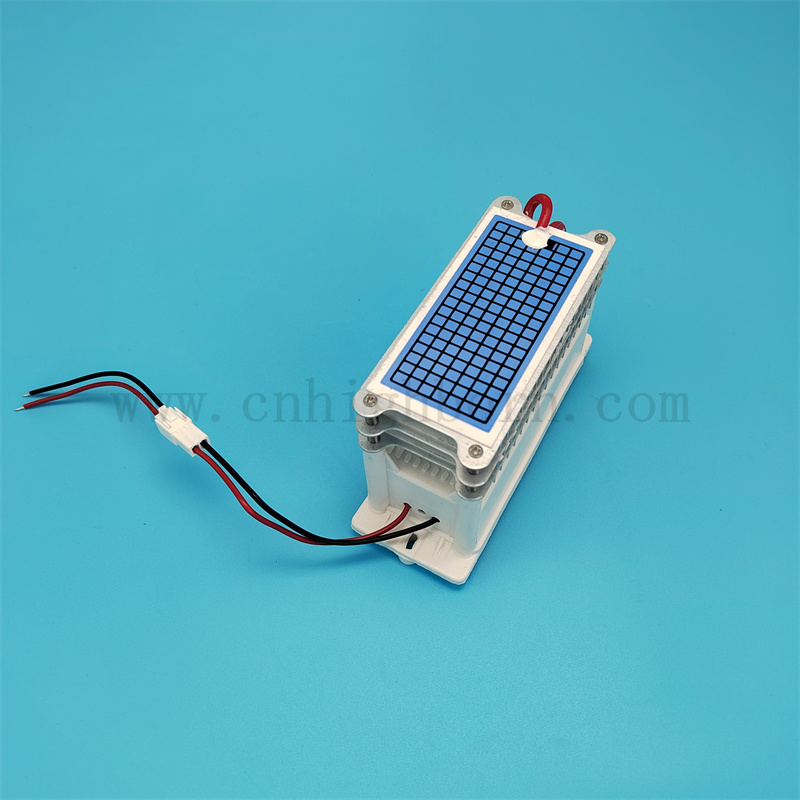
Understanding Ozone Generation requires examining the three primary methods used in the field. Each method offers distinct advantages and specific operational limitations. Selecting the wrong method for your application guarantees failure.
Corona discharge simulates natural lightning. It passes a high-voltage, high-frequency electrical discharge through a feed gas containing oxygen. A dielectric barrier controls this discharge, preventing a direct arc. The micro-discharge splits oxygen molecules into highly unstable oxygen free radicals. These radicals then collide with remaining oxygen molecules to form ozone. The precision of the dielectric gap and the frequency of the power supply determine the efficiency of the reaction.
This method offers the highest ozone concentration. You can expect 1% to 15% by weight depending on the feed gas. It scales exceptionally well. Engineers use it for municipal water treatment, commercial pools, industrial wastewater, and heavy odor remediation. However, it remains highly sensitive to moisture. You must provide dry, clean feed gas. Moisture leads to nitric acid formation. This acid corrodes internal components, destroys seals, and drastically degrades performance. I have seen entire stainless steel manifolds eaten away in months because a facility neglected their air dryer maintenance.
Maintenance on corona discharge systems requires strict adherence to schedules. You must pull the dielectric tubes, clean them with specific solvents to remove organic deposits, and inspect the high-voltage fuses. If a tube cracks, it can short out the entire transformer. Proper filtration of the feed gas down to 0.1 microns is necessary to prevent dust from baking onto the corona cell walls.
UV systems utilize specific wavelengths of light to photochemically split oxygen molecules. They specifically use vacuum UV at 184.9 nm. This mimics natural ozone creation in the Earth's stratosphere. The feed gas passes over the UV lamps, and the photon energy breaks the oxygen bonds. It is a simpler mechanical process with fewer moving parts than corona discharge.
These systems carry a lower initial setup barrier. They are less sensitive to ambient humidity, meaning you don't need complex air drying equipment. However, they produce a significantly lower concentration of ozone. Output usually falls below 0.1% by weight. Photochemical generation proves inefficient for high-demand industrial applications. It works best for light commercial air treatment, exhaust systems, or small-scale spa applications. Note that UV lamps operating at 253.7 nm actually destroy ozone. You must consider this in dual-wavelength designs. If you mix up your lamp types during a maintenance cycle, you will completely neutralize your system's output.
Lamp degradation is the primary maintenance concern here. UV lamps lose intensity over time, even if they still light up. You must replace them every 8,000 to 10,000 hours of operation. Quartz sleeves protecting the lamps must be cleaned regularly, as any dust or oil accumulation blocks the UV light and stops production entirely.
Electrolytic systems generate ozone directly from water molecules. They split the water using a proton exchange membrane (PEM) and an electrical current. This entirely bypasses the need for a gaseous feed. The anode and cathode are pressed directly against the membrane, and as water flows across the anode, it is oxidized into ozone and oxygen gas.
This method dissolves ozone directly into the water stream. It presents zero off-gassing risks into the ambient air under normal operation. It produces highly concentrated dissolved ozone, often reaching 20% by weight in the localized reaction zone. The trade-off involves high initial equipment requirements. You must use highly purified water, such as reverse osmosis or deionized water. Standard tap water contains calcium and magnesium, which will immediately scale the membrane, causing irreversible failure within days.
These systems are heavily utilized in pharmaceutical water loops, semiconductor manufacturing, and specialized food processing where introducing outside air (and potential airborne contaminants) is strictly prohibited. The maintenance involves monitoring water conductivity and replacing the PEM cell assembly when the voltage drops below operational thresholds.
Selecting the right equipment requires matching technical specifications to your exact facility needs. You must evaluate output capacity, gas preparation, cooling, and mass transfer capabilities. A failure in any of these four pillars will cripple your installation.
You must match the gram-per-hour output to the specific biological or chemical oxygen demand of your target environment. Undersizing leads to failed sanitization. The system will never reach the required oxidation reduction potential (ORP). Oversizing without proper controls leads to dangerous ambient concentrations. It also wastes significant electrical energy.
Calculate the total water volume or air volume to be treated.
Determine the peak contaminant load (BOD/COD) during maximum production hours.
Factor in the half-life of ozone at your specific operating temperature.
Calculate the required mass transfer efficiency based on your injection method.
Select a generator that provides 20% more capacity than your peak calculated demand to account for system degradation over time.
Investing in an integrated oxygen concentrator increases ozone yield significantly. Using pressure swing adsorption (PSA) technology can boost output by up to 400%. It also extends the lifespan of the dielectric tube by eliminating nitrogen oxides. PSA systems use zeolite beds to strip nitrogen from compressed air, delivering 90-95% pure oxygen to the generator.
If you use ambient air, you absolutely need desiccant or refrigerant air dryers. You must maintain a dew point below -60°C to protect the corona cells from moisture damage. A simple coalescing filter is not enough. You need a twin-tower regenerative desiccant dryer. I always install a dew point monitor with an automatic interlock; if the dew point rises above -50°C, the generator shuts down automatically to protect the cells.
Ozone generation remains highly inefficient regarding energy conversion. Up to 85% to 90% of the electrical energy converts directly to heat. Heat accelerates the thermal decomposition of ozone back into oxygen. Proper cooling is critical to maintain output yields. If your cooling system fails, your ozone production drops to near zero, even though the generator is drawing full power.
Air-cooled systems work well for portability and intermittent use, such as fire restoration. Water-cooled systems utilize double-jacketed dielectric chambers connected to closed-loop chillers. You need these for continuous, high-output industrial operations. Always monitor the inlet and outlet temperatures of your cooling water. A delta-T (temperature difference) larger than 5°C indicates poor flow or severe scaling inside the cooling jacket, requiring immediate acid flushing.
For water applications, getting the gas into the liquid is the hardest part. Venturi injectors utilize pressure differentials based on Bernoulli's principle. They draw ozone gas into the water stream, achieving mass transfer efficiencies up to 90%. You must size the venturi perfectly to your water flow rate to create the necessary vacuum.
Bubble diffuser columns offer a low-pressure alternative. They are less efficient, typically hitting 10% to 15% transfer efficiency, and remain prone to off-gassing. You need massive contact tanks to make diffusers work. Remember that Henry’s Law dictates solubility. Higher operating pressures and lower water temperatures drastically improve ozone dissolution. Injecting ozone into a pressurized side-stream loop before mixing it back into the main flow is the most reliable method for industrial water treatment.
Deploying powerful oxidants requires strict safety protocols. You must manage regulatory compliance, material degradation, and ambient exposure risks. Ozone does not discriminate; it will oxidize your lungs just as effectively as it oxidizes wastewater contaminants.
You must adhere strictly to the OSHA permissible exposure limit. This limit stands at 0.1 ppm over an 8-hour shift. NIOSH guidelines set the immediately dangerous to life or health (IDLH) threshold at 5 ppm. For food processing, the FDA and USDA classify ozone as Generally Recognized As Safe (GRAS) for direct contact with food and food-contact surfaces under specific regulations. You must maintain detailed logs of your ambient monitor calibrations to prove compliance during facility audits.
Ozone will rapidly degrade natural rubber, certain plastics, and unprotected wiring. You must ensure all wetted parts, tubing, and seals utilize highly ozone-resistant materials. Using the wrong gasket material will result in a catastrophic leak within days.
| Material | Compatibility Rating | Common Uses in Ozone Systems |
|---|---|---|
| Teflon (PTFE) | Excellent (Class A) | Gas tubing, valve seats, gaskets |
| 316L Stainless Steel | Excellent (Class A) | Piping, reaction chambers, fittings |
| Kynar (PVDF) | Excellent (Class A) | Injectors, rigid piping, sensor housings |
| Viton | Good (Class B) | O-rings, dynamic seals |
| Natural Rubber | Severe Degradation (Do Not Use) | None |
| Standard PVC | Poor (Class C) | Avoid in high concentration gas lines |
You must implement ozone destruct units for safe venting. Thermal destruct units heat the gas to over 300°C for instant destruction. Catalytic units use manganese dioxide or copper oxide catalysts to revert residual ozone back to oxygen without requiring massive electrical heaters. Protect catalytic destruct units from moisture, as condensation will permanently blind the catalyst bed.
Integrate automated electrochemical or UV absorption sensors into your facility. These must shut down the generator automatically if ambient levels exceed safety thresholds. Place sensors near the floor, as ozone is heavier than air and will pool in low-lying areas. When treating water containing bromide ions, you must mitigate the risk of bromate formation through precise pH adjustment or ammonia addition. Bromate is a regulated carcinogen, and ignoring this chemistry in drinking water applications will result in severe regulatory penalties.
An ozone system provides powerful, localized chemical production. You must align the generation method precisely with your commercial application. Follow these actionable steps to ensure successful deployment:
Conduct a thorough site assessment to determine your exact biological and chemical oxygen demand.
Evaluate your facility's existing ventilation and ambient air quality to determine feed gas requirements.
Audit all piping, seals, and structural materials in the treatment area for strict ozone compatibility.
Consult with an integration engineer to design a closed-loop dissolution system or a safely monitored ambient application.
Install redundant ambient safety monitors interlocked directly with the generator's power supply.
A: Ionizers release negatively charged ions to clump particles together for mechanical filtration. They do not destroy contaminants. Ozone generators produce a highly reactive gas that chemically oxidizes and destroys odors, bacteria, and organic contaminants at the molecular level.
A: In ambient air, ozone has a half-life of roughly 20 to 30 minutes before reverting back to oxygen. In water, it dissipates much faster, typically within 10 to 20 minutes depending on water temperature, pH, and organic load.
A: Standard PVC degrades under high ozone concentrations over time. It becomes brittle and cracks. You should use CPVC for low concentrations, or upgrade to Teflon (PTFE), Kynar (PVDF), or 316L stainless steel for industrial applications.
A: White powder inside the corona cell usually indicates nitric acid formation reacting with internal components. This happens when ambient air with high humidity is used as the feed gas without proper desiccant drying.
A: While not always mandatory, an oxygen concentrator significantly increases ozone yield, reduces energy consumption per gram of ozone, and prevents the formation of corrosive nitrogen oxides inside the generator cell.
A: You must calibrate electrochemical ambient sensors at least every six months. Sensor heads degrade over time and lose sensitivity, which can lead to dangerous exposure levels if left unchecked during continuous facility operations.