
Views: 0 Author: Site Editor Publish Time: 2026-10-30 Origin: Site


Are you wasting water on your farm? Picture a mid-summer afternoon in a sprawling orchard. The surface crust looks bone dry. This visual cue often prompts field crews to immediately turn on the irrigation pumps. Yet, two feet down, the deep root zone might still be completely saturated. Overwatering drains precious pumping resources and washes away expensive liquid nutrients. Conversely, underwatering severely stunts plant growth and reduces overall yield.
Finding the right moisture measurement tool is notoriously difficult. Modern farm managers and agronomists require highly accurate, actionable data to make split-second irrigation decisions. Rather than relying on guesswork, we will explore how to select the ideal equipment to measure precise plant water stress. This ensures your crops thrive without wasting a single drop of water.
A soil tensiometer directly measures matric potential, indicating exactly how hard plant roots must work to extract moisture from the surrounding earth.
The porous tip is the absolute most critical component of the device. Its material quality dictates the accuracy, responsiveness, and reliability of the internal vacuum seal.
Buyers must carefully choose between traditional analog models for manual field reading and digital transducer models designed for automated data logging.
These devices have strict physical limitations. They are generally most effective in loamy textures within a 0 to 80 kilopascals tension range.
Proper maintenance, including routine refilling, manual degassing, and strict winterization, is mandatory to keep the apparatus functioning accurately over multiple growing seasons.
Before diving into the hardware, buyers should understand the current trajectory of the agricultural technology market. Global water scarcity and soaring energy costs for pumping are forcing a massive operational shift. Agronomists are rapidly moving away from calendar-based watering schedules. Instead, the industry trend heavily favors precision irrigation driven by real-time field data.
Furthermore, commercial growers are increasingly demanding tools that integrate directly into smart-farm ecosystems. They want sensors that provide a true reflection of root-zone stress rather than theoretical weather models. This specific demand has revitalized the adoption of tension-based measurement. It offers a direct biological indicator of plant stress that volumetric sensors simply cannot replicate without extensive, site-specific calibration.
Before allocating capital toward agricultural monitoring equipment, procurement teams must thoroughly understand the fundamental mechanics of the tools under evaluation. This device is not a generic moisture meter. Rather, it is a highly specialized instrument explicitly designed to measure soil matric potential.
To grasp how this apparatus operates, one must look at how plants actually consume water. Plant roots do not passively absorb moisture like a kitchen sponge soaking up a spill. Instead, they actively exert biological energy to pull water away from individual dirt particles. This capillary force is scientifically known as soil water tension.
The instrument mimics this exact biological process. It consists of a sealed, water-filled plastic tube, usually constructed from heavy-duty PVC or acrylic, with a porous tip at the bottom and a pressure gauge at the top. When installed in the ground, the dry earth outside the tube pulls water through the microscopic pores of the tip. Because the main tube is completely airtight, this outward movement of water creates a vacuum inside the column. The gauge registers this exact vacuum pressure. Subsequently, when irrigation or heavy rainfall occurs, the ground becomes saturated. The vacuum inside the tube then pulls water back in, dropping the gauge reading back to zero.
Many buyers default to purchasing volumetric water content sensors, which measure the total percentage of water in a given volume of dirt. However, knowing the volume does not necessarily tell you if the plant can actually access that water.
For example, a heavy clay environment might contain 30 percent water by volume. Because clay particles hold onto moisture incredibly tightly, a crop might still suffer from severe drought stress despite the high water content. In contrast, a sandy profile with only 10 percent water by volume might easily release that moisture to the root system. Measuring tension eliminates this guesswork. By reading the pressure, growers see exactly how much effort the plant is exerting. This provides a universal metric for plant stress, allowing farm managers to trigger irrigation only when the crop genuinely needs it.
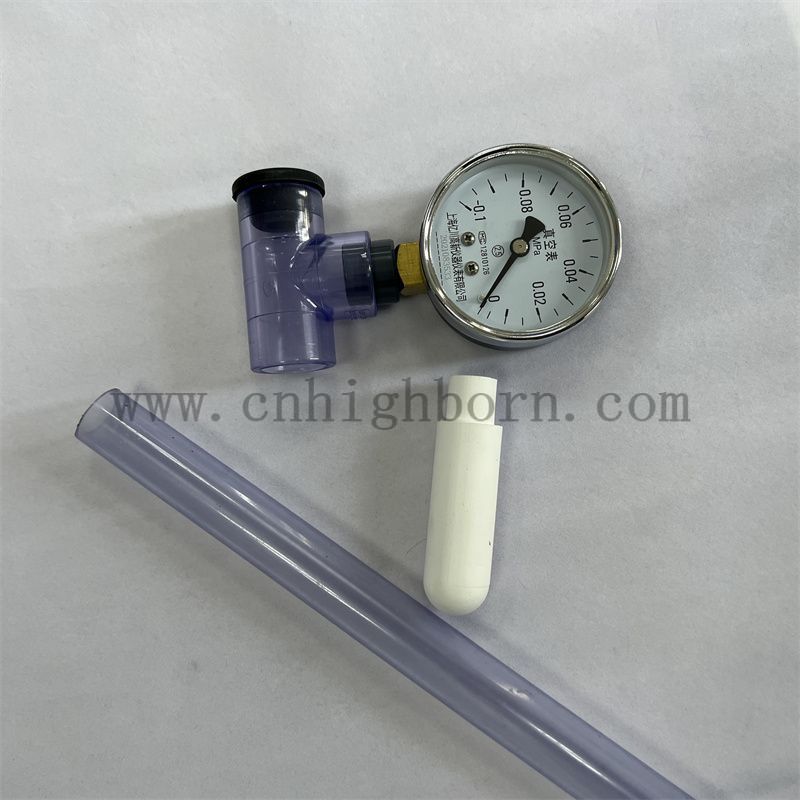
The agricultural market offers two primary categories of these devices. Selecting the appropriate model depends heavily on your operation infrastructure, labor availability, and data integration requirements.
The analog vacuum gauge tensiometer has served as the industry standard for decades. These units feature a mechanical dial mounted at the very top of the water column, typically displaying a range from 0 to 100 centibars.
From a financial perspective, they are significantly more cost-effective per unit than digital alternatives. Specifically, they operate entirely on physical vacuum principles. This means no batteries, solar panels, or complex wiring harnesses are required. Farm workers can simply walk the crop rows and read the dials visually. On the downside, data collection is highly labor-intensive. Without manual recording on a clipboard or tablet, managers lack historical data to track drying trends over the season.
Modern commercial operations increasingly rely on automated systems. Digital variants replace the traditional mechanical dial with a highly sensitive electronic pressure transducer.
These models shine in their ability to be wired directly into central data loggers, wireless telemetry nodes, or automated irrigation controllers. Consequently, buyers receive continuous, real-time data streams. Agronomists can plot precise drying curves on their computers. However, this automation comes with a higher upfront investment. The combined cost of the sensors and the required telemetry equipment demands a larger initial capital expenditure, alongside a need for basic technical knowledge regarding wiring and power management.
To make an informed purchasing decision, it helps to see a direct comparison between the two leading soil moisture technologies available on the market today.
| Feature | Tension-Based Sensor | Volumetric Sensor |
|---|---|---|
| Primary Measurement | Matric Potential - Plant effort required | Total water volume percentage |
| Calibration Needs | None. 30 kPa means 30 kPa in any soil type. | High. Requires specific soil-type calibration. |
| Best Soil Environment | Loam, Silt, Greenhouse potting mix | Sand, Heavy Clay, Remote locations |
| Maintenance Level | High. Requires refilling and degassing. | Low. Solid-state, install and leave. |
| Primary Use Case | Precision irrigation timing for high-value crops | Tracking total water applied and drainage rates |
When reviewing manufacturer specifications, scrutinize the following engineering features. This ensures the instrument possesses the build quality required for harsh agricultural environments.
The standard measurement range sits between 0 and 100 kilopascals. Nevertheless, due to the physical limitations of water under a vacuum at standard atmospheric pressure, most units max out around 80 to 85 kilopascals before cavitation occurs. Cavitation is the moment when air bubbles form and violently break the internal vacuum.
Buyers must verify that this operational range matches their specific crop requirements. Shallow vegetable crops and strawberries typically demand irrigation when tension reaches just 20 to 30 kilopascals. In contrast, established orchards and vineyards might be intentionally allowed to dry down to 40 to 60 kilopascals to encourage deep root growth. If your strategy involves severe deficit irrigation where the ground dries beyond 80 kilopascals, a standard model will not function correctly.
These tools are manufactured in various lengths, typically ranging from a compact 15 centimeters up to a massive 120 centimeters. The length you procure must directly correspond to the active root zone of your target crop.
For shallow-rooted greens like lettuce, a short tube is perfectly sufficient. For deep-rooted fruit trees, a longer column is absolutely necessary. Agronomists highly recommend purchasing multiple lengths and installing them in pairs at the exact same location. This multi-depth monitoring strategy allows growers to instantly see if applied water is successfully penetrating the deep root zone or if it is merely wetting the topsoil and evaporating.
While the top gauge provides the readable output, the actual sensing mechanism relies entirely on the tip buried in the dirt. Understanding the material science behind this specific component is essential for making a sound investment.
The tip acts as a semi-permeable membrane between the fluid inside the tube and the earth outside. High-quality agriculture ceramic, specifically porous alumina ceramic, is meticulously engineered with microscopic, uniform pores.
When this material is saturated, the surface tension of the water within these microscopic pores is incredibly strong. It allows water molecules to pass through freely while simultaneously blocking outside air from entering. This unique physical property is known as the bubbling pressure. If the material is poorly manufactured or damaged, ambient air will leak into the tube prematurely. This instantly breaks the internal vacuum and results in a false, stagnant zero reading on the gauge.
Not all tips are manufactured to the same rigorous standards. When comparing different brands, buyers should carefully evaluate the specifications of the porous ceramic probe. High-quality components offer distinct advantages that directly impact your return on investment.
Consistent pore size distribution is paramount. Inferior materials often contain uneven pore sizes, where a single oversized pore acts as a weak point, allowing air to breach the vacuum at lower tension levels. Furthermore, the material must boast exceptional chemical resistance. Farm dirt contains varying pH levels, dissolved salts, and caustic synthetic fertilizers. Low-grade tips will degrade, soften, or clog when exposed to these elements. Investing in superior structural integrity, like porous alumina, ensures the probe can withstand the physical pressure of being pushed into a cored hole without snapping.
Transparency is vital when selecting agronomic equipment. While this technology remains the gold standard for measuring plant water stress, it is not a universal magic bullet for every single farm. Buyers must understand the physical limitations to avoid wasting capital.
These devices perform exceptionally well in loamy and silty textures, but they struggle at the extreme ends of the spectrum. The tool effectiveness relies entirely on maintaining direct, unbroken hydraulic contact with the surrounding earth.
In extremely coarse, sandy environments, water drains rapidly by gravity alone. As the sand dries out, it can physically shrink away from the tip. Once this hydraulic contact is severed, the device can no longer feel the moisture status, leading to stagnant readings. Conversely, heavy clay presents the opposite hurdle. Clay holds water with immense force, easily reaching tensions of 1500 kilopascals during a drought. Because the instrument stops functioning around 85 kilopascals, it becomes effectively blind in clay that is allowed to dry significantly between watering cycles.
Buyers must factor in the total cost of ownership, which heavily includes the manual labor required to maintain the instruments. This is absolutely not a set-it-and-forget-it piece of hardware. Preparing your field team for routine maintenance ensures long-term accuracy.
To maintain a highly accurate vacuum, the fluid inside the column must remain completely free of air bubbles. Over time, dissolved gases naturally present in the ground will slowly migrate through the tip. They accumulate at the top of the tube, acting like a spongy shock absorber that makes the gauge sluggish.
Operators must periodically visit each unit in the field. Picture walking the rows with a specialized hand-held vacuum pump, unscrewing the cap, topping off the fluid with distilled water, and carefully bleeding out trapped air bubbles. This restores that crisp, immediate needle response on the dial. Using distilled water is crucial. Standard tap water contains heavy minerals and organic matter that will eventually clog the microscopic pores and promote internal algae growth.
If your agricultural operation experiences freezing temperatures during the winter months, winterization is a strict, non-negotiable task. Because the core tube is filled with liquid, leaving it exposed during a hard freeze will result in catastrophic mechanical failure.
As the internal water freezes, it expands with immense outward pressure. This expansion will easily shatter the acrylic tubing, destroy the delicate internal gears of the pressure gauge, and permanently crack the porous tip. Before the first frost hits, crews must carefully extract all units from the ground. Empty them completely, clean the tips gently with a soft bristle brush, and store them in a dry, temperature-controlled shed until the spring planting season arrives. Proper winterization guarantees the equipment will survive for multiple years.
They are highly accurate for measuring matric potential, which directly correlates to how much stress a plant is experiencing. They maintain peak accuracy within the 0 to 80 kilopascals range, provided they are properly installed, completely free of trapped air bubbles, and regularly maintained with clean, distilled water.
With proper care, avoiding freezing temperatures, and gentle end-of-season cleaning, a premium alumina ceramic tip can easily last for several growing seasons. However, prolonged exposure to high salinity, caustic fertilizers, or accidental physical impacts from farm machinery can significantly shorten its operational lifespan.
Yes, it is highly recommended to use a customized coring tool or auger that matches the exact outer diameter of the tube. This ensures a perfectly snug fit, providing the unbroken dirt-to-ceramic contact that is absolutely necessary for the device to pull a vacuum and read accurately.
This depends entirely on your crop and soil type. Shallow-rooted vegetables in sandy loam might need water at 25 to 30 kilopascals. Established fruit trees in heavier loam might not need irrigation until the gauge reads 50 to 60 kilopascals. Always consult with a local agronomist to establish the ideal stress threshold for your specific crop variety.
The porous tip must be placed directly in the active root zone where the plant is pulling the most water. For standard row crops, 30 to 45 centimeters is common. For deep-rooted orchards, installing two sensors—one at 30 centimeters and another at 90 centimeters—provides a complete profile of water movement.
A zero reading usually means the ground is completely saturated, such as immediately following a heavy rainstorm. However, if the ground is visibly dry and the dial still reads zero, the vacuum seal has been broken. This means cavitation has occurred, there is a physical crack in the tube, or the water has completely drained out, requiring immediate refilling and manual degassing.
Ultimately, upgrading your irrigation strategy with precision tools transforms how you manage water. By measuring actual plant stress, selecting high-quality components, and committing to routine maintenance, you can optimize yields and conserve vital resources. If you are ready to upgrade your farm water management, explore a professional-grade soil monitoring instrument from Highborn to ensure you get the exact specifications and durable ceramic probes your operation demands.