
Views: 0 Author: Site Editor Publish Time: 2026-10-14 Origin: Site


Guessing soil moisture during a mid-July heatwave is a fast track to crop failure. I have seen too many growers rely on kicking the dirt or squeezing a handful of topsoil to make critical watering decisions. Overwatering wastes expensive pumping energy and drowns delicate root systems. In contrast, underwatering severely stunts yield and diminishes fruit quality.
A soil tensiometer acts like a mechanical dummy plant root. Rather than just measuring volumetric wetness, it measures the exact matric potential. This is essentially how hard the plant has to work to extract hydration. This physical data empowers farm managers to abandon guesswork and make smarter, data-driven irrigation decisions.
In this engineering guide, you will learn the mechanics behind these devices, proper field setup protocols, and how to translate dial metrics into a highly efficient watering schedule.
Precision Matters: These instruments measure actual soil water tension. They provide objective data on exactly when and how much to irrigate based on plant stress, rather than superficial topsoil appearance.
Crucial Components: The reliability of your field data depends entirely on the airtight seal of the water column and the micro-porosity of the ceramic tip.
Installation is Key: Executing a proper setup requires meticulously pre-soaking the device and ensuring snug, air-free contact between the probe and the surrounding earth.
Data-Driven Decisions: Learning to interpret vacuum pressure empowers farm managers to maintain moisture in the optimal sweet spot for maximum nutrient uptake.
Routine Maintenance: Consistent monitoring, periodic refilling of the reservoir, and seasonal winterization are mandatory to keep the instrument functioning accurately.
To implement a highly efficient irrigation strategy, agricultural professionals must understand the physical mechanics of this tool. This understanding is the first step toward precision agriculture.
Matric potential measures how tightly water molecules are held by surrounding earth particles. As the ground dries out, capillary forces cause the remaining moisture to cling stubbornly to the dirt matrix.
Think of it as drinking through a straw. When a glass is full, sipping requires almost no effort. As the glass empties, you have to suck much harder to pull the last few drops from the bottom. Plants experience this exact phenomenon. When the ground is saturated, roots extract moisture effortlessly. As the earth dries, the plant must expend significantly more physiological energy to pull hydration away from the dirt. The instrument measures this exact exertion force.
The device is elegantly simple. It requires no batteries or electrical components for basic operation. It consists of three primary parts working in unison.
First is the sealed water tube, a rigid plastic reservoir holding a column of distilled liquid. Second is the vacuum gauge positioned at the top, which registers the pressure drop inside the sealed chamber. Finally, we have the porous ceramic tip located at the bottom.
From a manufacturing standpoint, the quality of this tip dictates your data accuracy. Industrial-grade tips utilize porous alumina ceramic with a specific porosity of 30 to 40 percent. They feature microscopic pore sizes, typically around 1 to 3 micrometers, ensuring a high bubbling pressure. This specific engineering prevents air from breaking the vacuum while maintaining excellent hydrophilic properties.
Recent agronomic data reveals a massive shift toward precision deficit irrigation. Driven by escalating global water scarcity and soaring nitrogen fertilizer costs, commercial operations are rapidly abandoning rigid timer-based schedules. Market analyses indicate that tools measuring actual plant stress are increasingly prioritized over simple weather-based evapotranspiration models. This transition allows farmers to optimize inputs without sacrificing harvest weights.
Investing time and capital into precise soil moisture monitoring yields a measurable return on investment. It transitions farm management from reactive guessing to proactive scheduling.
Overwatering is a silent killer in cultivation. Constant saturation displaces all oxygen in the root zone. Roots cannot respire without oxygen, leading to anaerobic conditions that promote severe fungal diseases like Pythium.
Furthermore, excessive irrigation causes deep percolation. Excess flow pushes expensive soluble fertilizers deep into the subsoil, far below the reach of the root zone. This nutrient leaching wastes agricultural inputs, reduces crop vitality, and contributes heavily to groundwater pollution.
Underwatering forces plants into survival mode. When a crop spends excess energy fighting to extract hydration, it diverts vital resources away from fruit sizing and vegetative growth. Applying water only when the gauge indicates the onset of mild stress keeps the crop in its peak growth stage. Specifically, this precision drastically reduces resource consumption and lowers the heavy diesel costs associated with running massive irrigation pumps.
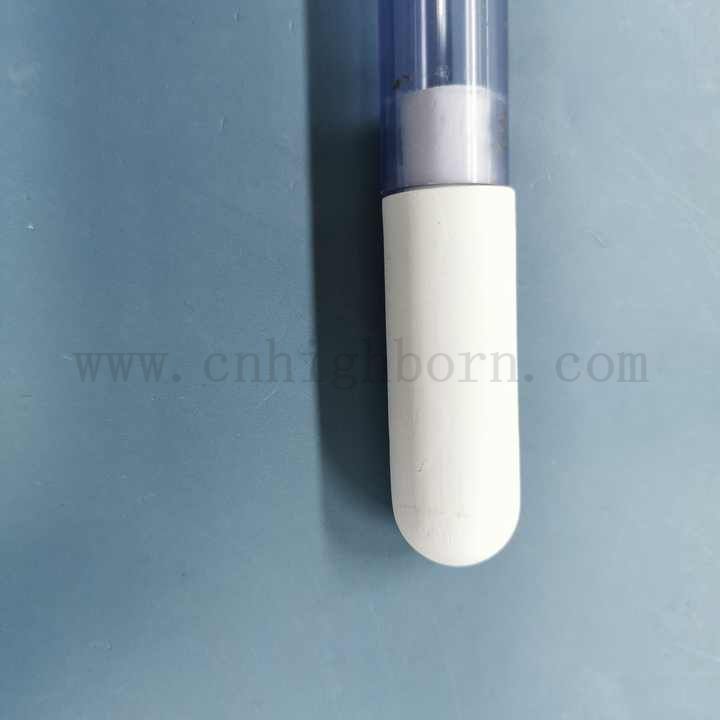
The accuracy of your field data depends entirely on the quality of your setup. An improperly installed device will draw in ambient air, resulting in false metrics and potential crop failure. Executing a flawless tensiometer installation requires meticulous preparation and adherence to standard operating procedures.
Before heading to the field, the porous tip must be conditioned. The microscopic pores in the material are naturally filled with air. If inserted dry, this trapped air will break the vacuum seal immediately upon deployment.
Submerge the bottom of the device in a bucket of clean distilled water for 12 to 24 hours prior to field placement. This process forces air out and ensures strong capillary action. Utilizing a premium ceramic probe pipe is critical here. High-grade alumina materials offer consistent porosity and superior durability against abrasive subterranean particles.
Fill the plastic reservoir with distilled water. Never use standard tap water. Calcium and magnesium deposits will eventually clog the microscopic pores from the inside out. Once filled, use a specialized hand pump to pull a vacuum on the tube, extracting dissolved air bubbles suspended in the liquid. Tap the side of the acrylic gently to help bubbles rise, refill to the very brim, and seal the cap tightly.
Select your monitoring site and use a coring tool or auger to create a perfectly vertical hole. The diameter of this cavity is crucial. It must exactly match the outer diameter of the tube, typically 22 millimeters. Do not use a standard shovel. Digging a wide crater and backfilling it destroys the natural subterranean structure and disrupts the capillary pathways required for accurate readings.
To guarantee perfect contact between the instrument and the surrounding earth, utilize the mud slurry technique. Take a handful of the sifted dirt you just augered out and mix it with a small amount of water until it reaches the consistency of thick pancake batter.
Pour a small amount into the bottom of the hole, then gently push the device down with a twisting motion. The mud will pack tightly around the tip, eliminating microscopic air gaps. Air pockets are the absolute enemy of these instruments. If the tip touches a void instead of dirt, the dial will be completely inaccurate.
A perfectly calibrated sensor is useless if placed in the wrong location. Strategic placement ensures that the data you collect accurately represents the broader conditions of your entire field or greenhouse zone. You should position your monitoring stations in areas that represent the average conditions of your irrigation block. Avoid extreme high spots that drain unusually fast, and extreme low spots where runoff naturally pools.
For professional agriculture, installing these tools in pairs at a single monitoring station is the industry standard. The shallow sensor is installed in the upper portion of the active root zone, acting as your start trigger. The deep sensor is installed near the bottom of the root system, acting as your stop trigger. If the deep sensor drops to zero during a watering cycle, moisture has reached the bottom of the profile. Continuing to run pumps past this point results in wasted runoff.
Understanding the numbers on the dial transforms raw field data into actionable agronomic decisions. The vacuum gauge reading typically measures tension in centibars or kilopascals. Reading this dial is exactly like taking the blood pressure of your field.
A metric in this range indicates a state of total saturation, typically occurring immediately after heavy rainfall or a prolonged watering cycle. The subterranean pores are completely filled with liquid, leaving no room for oxygen. If the dial remains in this range for several consecutive days, the ground is waterlogged. You must withhold watering immediately to prevent hypoxia.
For most agricultural environments, this represents field capacity. Excess gravitational drainage has ceased, leaving a perfect balance of moisture and oxygen. In this sweet spot, crops extract hydration with minimal effort, allowing them to direct their physiological energy toward vegetative growth and fruit production.
As the ground gradually dries, the water film surrounding the dirt particles becomes thinner and is held more tightly. When the dial enters this range, standard commercial crops begin to experience mild stress. This serves as the standard trigger point to initiate your pumps. Sandy environments drain rapidly and require a trigger closer to 30 centibars. Heavy clay retains moisture much longer, allowing you to safely wait until 50 or 60 centibars.
If the needle climbs above 60 centibars, the environment is becoming dangerously dry. At this stage, the tension is so high that plants must expend significant energy to survive, leading to visible wilting and stunted growth. Heavy and immediate intervention is required to restore the profile to field capacity.
| Vacuum Gauge Reading cb or kPa | Soil Condition | Action Required Sandy Soil | Action Required Clay or Loam Soil |
|---|---|---|---|
| 0 to 10 | Saturated or Waterlogged | Do not water. Allow drainage. | Do not water. Allow drainage. |
| 10 to 30 | Field Capacity Ideal | Monitor daily. | Monitor every few days. |
| 30 to 40 | Drying or Mild Tension | Start Irrigation. | Monitor closely. |
| 40 to 60 | Moderate to High Tension | Critical Stress Water immediately. | Start Irrigation. |
| 60 to 100+ | Severe Plant Stress | Danger Heavy watering needed. | Danger Heavy watering needed. |
Selecting the right monitoring equipment depends heavily on your operational scale and soil composition. The classic analog model remains a staple because it measures direct matric potential rather than estimated volumetric content. It requires no power and is highly cost-effective for small to medium farms.
However, the ceramic material is the deciding factor in longevity and accuracy. When selecting a unit, look for probes manufactured with high-purity alumina ceramics. These components offer a uniform pore structure, ensuring rapid response times to moisture changes. Inferior tips degrade quickly in high-salinity environments.
For operations spanning thousands of acres, manual data collection becomes a logistical bottleneck. In these scenarios, growers retrofit mechanical units with electronic pressure transducers. This provides the biological accuracy of traditional capillary methods combined with automated remote telemetry transmitted to a cloud dashboard.
This is a precision scientific instrument. Even a flawless setup will yield inaccurate data over time if the device is neglected. Routine maintenance is non-negotiable for ensuring longevity.
The operating principle relies on a continuous liquid column. During extended dry spells, as the earth pulls moisture through the porous tip, the internal fluid level will gradually drop. If it falls too low, the vacuum breaks, and the dial drops to zero. Inspect fluid levels weekly during peak summer months. When topping off, always use distilled liquid. Use your hand pump afterward to extract any newly introduced air bubbles, as trapped air compresses and distorts pressure readings.
The functional heart of the device is the porous tip. Over a growing season, this material can become clogged with microscopic silt, algae, or mineral salt deposits from heavy fertilizer applications. When pores block, fluid cannot flow freely, resulting in sluggish dial responses. At the end of the season, remove the unit from the field. Wash the exterior gently using a soft-bristled brush and warm water. Never use abrasive scrubbers or harsh chemical solvents, as these will permanently alter the pore size and ruin the calibration.
The most common cause of catastrophic equipment failure is frost damage. Because liquid expands when it freezes, leaving a fluid-filled acrylic tube in the ground during winter will inevitably cause the chamber to crack and the internal gauge mechanisms to rupture. Before the first hard autumn freeze, all units must be extracted, emptied entirely, and stored in a dry, temperature-controlled environment.
Mastering your equipment transforms irrigation from a reactive guessing game into a precise, data-driven science. Understanding your dial metrics prevents costly resource waste while shielding crops from the invisible dangers of hypoxia and nutrient leaching. Ultimately, the success of the system relies on industrial-grade ceramic materials bridging the gap between the subterranean environment and the sensor. If you are ready to upgrade your field monitoring accuracy, explore the high-performance porous ceramic solutions at Highborn to find the exact specifications for your agricultural needs.
During the peak summer growing season, you should check your gauges daily or at least every other day. Subterranean moisture depletes rapidly during periods of high heat and active plant transpiration. If your device is equipped with an electronic data logger, you can monitor trends continuously via a smartphone.
A sudden, unexpected drop to zero almost always indicates that the internal vacuum seal has been compromised. This is commonly caused by a worn top cap seal, the reservoir completely running dry, or the surrounding earth becoming so excessively parched that it broke the capillary connection with the tip. You must extract the unit, refill it, re-establish the pressure with a hand pump, and reinstall it using a fresh mud slurry.
Yes, they are highly effective in sandy environments, but the data must be interpreted differently. Sand features large particles and drains exceptionally fast. Consequently, the dial will rise much faster than it would in dense clay. Because sand holds very little reserve hydration, your trigger threshold will be much lower, typically around 20 to 30 centibars, to prevent sudden crop shock.
With proper care, routine end-of-season cleaning, and safe winter storage, a premium alumina tip lasts for several years. Its lifespan depends heavily on local conditions and aggressive fertilizer usage. If it becomes irreversibly clogged with mineral salts or develops micro-cracks, it must be replaced immediately to ensure accurate data collection.
Volumetric sensors measure the total percentage of liquid in the dirt. Tensiometers measure matric potential, which is the actual physical force required by the plant roots to extract that liquid. Matric potential provides a much more accurate reflection of real-time physiological plant stress.
A failing tip usually manifests as a sluggish gauge response or an inability to hold a vacuum after refilling. If the dial remains frozen despite obvious changes in field moisture, or if you cannot pull a vacuum with your hand pump, the microscopic pores are likely fractured or permanently calcified.