
Views: 0 Author: Site Editor Publish Time: 2026-10-21 Origin: Site


You kick the dry surface dirt in your field. The top layer is pure dust, but are the roots actually starving a foot down? Guesswork in irrigation drains farming budgets daily. Wasted water inflates pumping costs, while silent under-watering quietly decimates your harvest quality at the end of the season.
Standard volumetric sensors often provide confusing data. They tell you water is there, but not if the plant can actually drink it. The one-size-fits-all approach simply fails in professional agriculture because varying earth textures and complex root systems demand precise monitoring tools. Implementing a targeted soil moisture measurement strategy solves this problem by revealing exactly how hard your plants are working to survive.
Recent ag-tech market analyses reveal a massive operational shift across the industry. Driven by erratic climate patterns and increasingly strict groundwater regulations, commercial operations are rapidly abandoning calendar-based watering. The modern standard has moved toward continuous matric potential monitoring. Growers now rely on empirical tension data to trigger irrigation events, cutting water waste significantly while maintaining optimal root zone hydration.
Tension monitoring provides a direct indicator of actual plant stress rather than just total water volume.
The bottom ceramic tip is the most critical component. Its material quality and specific porosity dictate the responsiveness of your entire system.
Sandy fields require distinctly different monitoring ranges compared to heavy clay environments.
Crop root depth dictates your required device length. Shallow sensors work for vegetables, while deep multi-sensor setups are mandatory for orchards.
Proper installation with perfect earth contact and routine degassing maintenance are non-negotiable for reliable data collection.
Before purchasing equipment, you must understand the mechanical principles behind tension monitoring. This foundational knowledge ensures you select hardware engineered for your specific environment.
In agronomy, there is a fundamental difference between Volumetric Water Content and Soil Water Potential. Volumetric sensors simply measure the physical volume of water present. However, they fail to indicate whether a plant can actually extract that liquid. Tension measures matric potential, representing the physical suction force roots must exert to draw in moisture. Consequently, monitoring this tension in centibars or kilopascals is widely considered the superior method for gauging real-time biological stress.
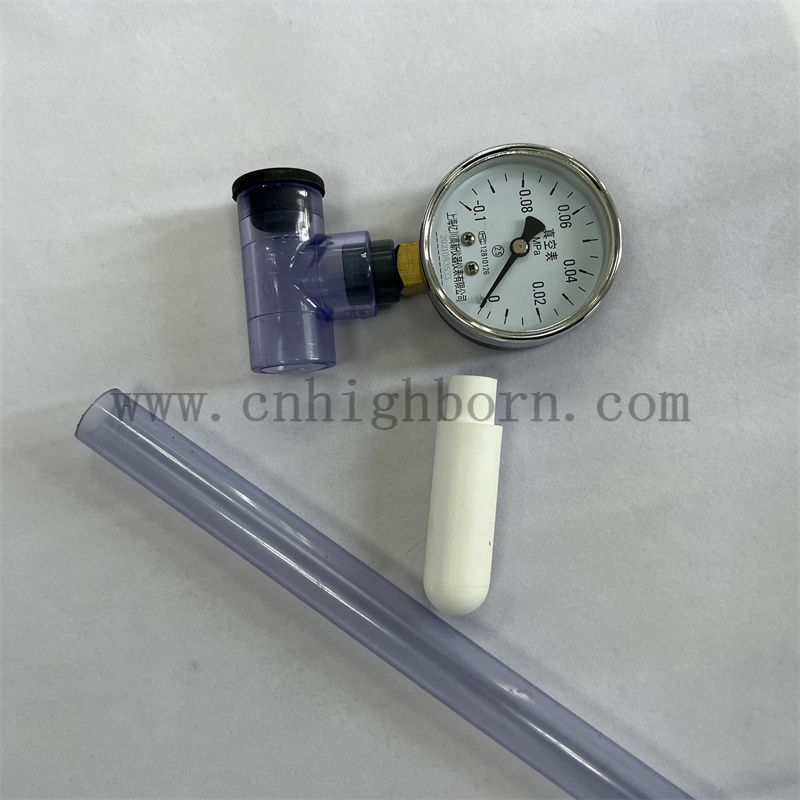
The mechanics of a standard unit are straightforward but require precision engineering. The device consists of a sealed polycarbonate tube filled with fluid, a top-mounted pressure gauge, and a permeable tip at the bottom. As the surrounding earth dries, it naturally pulls liquid out of the sealed column through the tip. This extraction creates an internal vacuum. The attached gauge registers this vacuum pressure, giving you a direct visual reading of how stubbornly the earth is holding onto its hydration.
The entire functional integrity of this setup relies on its bottom tip. This component acts as the vital bridge between the instrument and the subterranean matrix. High-quality materials like a premium porous ceramic probe ensure optimal fluid exchange without breaking the vacuum seal prematurely. Industrial-grade alumina ceramic with finely calibrated microscopic pore sizes—typically in the sub-micron to 3-micron range—reacts rapidly to environmental changes while maintaining structural integrity under high vacuum stress.
You must match the sensitivity of your equipment to the physical texture and drainage characteristics of your fields. A sensor calibrated for coastal sand will perform poorly in dense river valley clay.
Sandy profiles feature large particles, rapid drainage, and notoriously low retention capabilities. Because liquid moves quickly past the root zone, plants can experience severe drought stress within hours on a hot afternoon.
In these highly permeable conditions, you need highly sensitive and quick-reacting ceramic tips. Complete depletion happens at much lower tension ranges here. Growers typically initiate their pumping cycles when the dial reads between 10 and 30 centibars.
Loam is widely considered the ideal agricultural foundation. It offers a perfectly balanced mixture of sand, silt, and clay. It retains moisture beautifully while allowing adequate drainage to prevent root suffocation.
Standard alumina ceramic tips perform exceptionally well in loam. The operating range for optimal hydration usually falls between 30 and 50 centibars. These medium-textured environments provide consistent data without requiring specialized high-tension modifications.
Clay consists of microscopic particles that hold liquid incredibly tightly. While these fields stay damp for long periods, plants have to work exponentially harder to extract sustenance. They often suffer stress even when the ground feels wet to the touch.
Working in dense clay requires robust, high-tension ceramic probes. A known limitation of standard units is that in extremely dry clay—typically above 80 centibars—the vacuum can break. This phenomenon is known as cavitation. To prevent this, you must proactively manage water applications before the earth reaches this extreme threshold.
| Soil Texture | Drainage Speed | Ideal Watering Trigger | Recommended Ceramic Spec |
|---|---|---|---|
| Coarse Sand | Very Fast | 10 to 30 centibars | Standard porosity, fast response |
| Medium Loam | Moderate | 30 to 50 centibars | Standard alumina ceramic |
| Heavy Clay | Very Slow | 60 to 80 centibars | High-density, fine pore structure |
Accurate measurement depends entirely on where the sensor sits within the subterranean profile. A common error in field management is monitoring outside of the plant’s active feeding zone. Placing a sensor too shallow leads to underestimating deep reserves. Conversely, placing it too deep causes over-watering because surface roots dry out while the deep sensor still reads wet.
Vegetables, strawberries, and turf extract the majority of their required nourishment from the top six to twelve inches of earth. This top layer is highly susceptible to rapid evaporation from sun and wind exposure. Moisture levels here fluctuate drastically within a single day.
Short tubes ranging from six to twelve inches are optimal for these plants. The primary sensor must sit directly in the active feeding zone. Irrigating based on this shallow data prevents the application of excess water, which easily washes mobile nutrients below the reach of short root systems.
Corn, cotton, and potatoes require a more nuanced approach. Their roots typically extend well past the topsoil, drawing sustenance from depths of eighteen to twenty-four inches during peak vegetative growth stages.
Medium-length tubes are required here. Agronomists strongly recommend a two-sensor setup for row crops to ensure precise management. One shallow sensor monitors the active upper feeding zone where fertilizers are concentrated. A second deeper sensor monitors the subsoil reserve. If the shallow gauge indicates dry conditions but the deep gauge reads wet, you can apply a light cycle to wet the topsoil without causing deep percolation.
Tree nuts, citrus orchards, and vineyards present complex measurement challenges. These permanent crops develop extensive systems reaching depths of thirty-six to forty-eight inches. Managing hydration here requires understanding exactly how liquid penetrates through multiple underground horizons.
Long tubes utilized in a multi-depth configuration are absolutely necessary. Orchard growers often face confusion when surface dirt appears bone-dry, yet trees show no signs of stress. This happens because deep roots are actively extracting sustenance from below. The engineering best practice is installing a multi-depth station at twelve, twenty-four, and thirty-six inches. The shallow sensor dictates when to turn the pumps on. The deepest sensor dictates how long to run them. If the deepest sensor shows a pressure drop immediately after watering, liquid has pushed past the root zone, signaling that your run-time is too long.
The fundamental physics of measuring matric potential remains identical regardless of the display mechanism. However, the choice between a traditional analog dial and a modern digital system dictates how you collect and apply data to your daily operations.
A traditional vacuum gauge tensiometer is a purely mechanical device. It relies entirely on the physical vacuum created inside the sealed tube. High-quality units feature hermetically sealed dials that resist fogging and internal corrosion.
These devices are incredibly cost-effective and require zero power infrastructure. There are no batteries to replace, no solar panels to clean, and no software subscriptions to maintain. The mechanical dial provides an immediate visual reading in the field. The primary drawback is the manual labor requirement. Personnel must physically walk or drive through the fields to log readings. This setup is perfectly suited for small to medium-sized farms, localized greenhouse operations, and budget-conscious growers.
Digital units replace the mechanical dial with an electronic pressure transducer. While they still rely on premium alumina ceramic materials to maintain the vacuum seal, the data output is fully digitized.
The massive advantage here is continuous automated data logging. Modern telemetry sensors transmit data via cellular networks directly to your smartphone. You can set custom alerts for when fields reach a critical dry threshold. In contrast, these systems require a substantially higher upfront capital investment and introduce technical complexities like maintaining gateways. They are the ideal choice for large-scale commercial agriculture where the labor cost of manual reading outweighs the hardware investment.
Transitioning from schedule-based watering to data-driven management requires an initial investment in hardware and education. However, empirical field data consistently demonstrates a rapid return on investment, frequently realized within a single growing season.
The most immediate financial benefit is the drastic reduction in total water volume applied. By measuring the exact matric potential, you can confidently delay watering until the soil approaches the specific stress threshold for your crop. Stopping the cycle exactly when moisture reaches the deepest active roots prevents severe over-application. For farms relying on deep wells, reducing pump run-times translates directly into substantial savings on electricity and diesel fuel.
Furthermore, precision irrigation scheduling prevents expensive fertilizer leaching. When a field is watered past its holding capacity, the excess liquid drains downward due to gravity. This deep percolation carries highly soluble nutrients, particularly nitrates, below the root zone. Proper scheduling keeps moisture strictly within the active profile, maximizing nutrient uptake and reducing the need for mid-season chemical applications.
Even the most expensive monitoring strategy will fail miserably if the underlying data is flawed. Buyer remorse in agricultural sensor technology usually stems from purchasing substandard equipment or installing it incorrectly.
Ignoring the quality of the ceramic tip is the most common mistake. Purchasing low-cost equipment often means settling for inferior, uncalibrated materials. If the ceramic lacks the correct porosity, it reacts sluggishly to changing weather. Worse, poorly manufactured ceramics crack under high tension, instantly breaking the vacuum seal. Always invest in specialized, high-grade alumina components that guarantee consistent exchange and long-term durability.
Poor earth contact during installation is another critical failure point. A sensor can only measure the environment it physically touches. If there are air pockets or rocks against the ceramic tip, the vacuum cannot form correctly. Never pound a tube into the ground. Instead, use a soil auger to drill a clean hole. Mix the excavated dirt with water to create a thick mud slurry. Pour this slurry into the hole and gently push the instrument down into it. This guarantees perfect airtight hydraulic contact.
Finally, forgetting routine maintenance ruins data accuracy. Over time, dissolved air gases naturally accumulate inside the fluid column. This trapped air acts as a spongy shock absorber, severely dulling the responsiveness of the gauge. You must periodically check fluid levels and refill the tube with clean distilled water. Using a specialized manual vacuum hand pump during the refilling process is absolutely necessary to extract trapped air bubbles and re-establish a tight seal.
Choosing the right monitoring equipment fundamentally improves farm efficiency and profitability. Success comes down to matching the ceramic tip's sensitivity to your specific earth texture and aligning the physical tube length perfectly with your crop's active root depth.
Whether you opt for a traditional mechanical dial for quick field checks or invest in a sophisticated digital network, upgrading your water management strategy is a powerful operational move. Precision data prevents wasteful over-watering, protects expensive fertilizer investments, and ensures your plants remain in the optimal growth zone.
Stop guessing about your subsoil conditions. By evaluating your unique field parameters and investing in industrial-grade components, you can optimize your true yield potential. For growers looking to upgrade their hardware, selecting a premium soil tensiometer equipped with engineered alumina ceramic probes from Highborn ensures maximum durability and unmatched accuracy in the harshest agricultural environments.
It depends heavily on your specific crop and earth texture. Generally, a reading near zero indicates complete saturation, often immediately after heavy rain. A reading between ten and thirty centibars represents field capacity, which is the ideal moisture state for most plants. Readings climbing above forty centibars indicate the profile is drying out, signaling that it is time to turn on the pumps before severe stress occurs.
The lifespan depends entirely on field conditions and your maintenance habits. With proper care, regular cleaning with distilled water to prevent mineral scaling, and strict winter storage protocols, a high-quality alumina probe will reliably function for several years. However, highly saline environments or leaving the unit exposed to freezing elements will drastically reduce its operational life.
Absolutely not. Because these instruments operate using a sealed tube filled with liquid, they are highly susceptible to freeze damage. If the ground temperature drops below freezing, the liquid inside the column expands. This expansion exerts immense internal pressure that will inevitably shatter the ceramic tip or crack the polycarbonate housing. You must extract, drain, and store them safely indoors before the first winter freeze.
A persistent loss of vacuum usually points to a physical hardware failure or an extreme environmental condition. The most common mechanical causes are a degraded O-ring seal at the top cap, a microscopic hairline crack in the ceramic tip, or a poorly threaded gauge. Additionally, if the surrounding earth becomes excessively dry, the tension becomes so strong that it pulls ambient air directly through the ceramic pores, instantly breaking the vacuum.
They serve completely different agronomic purposes. A standard volumetric sensor measures the quantitative volume of liquid physically present in the dirt. A tensiometer measures the qualitative energy, showing exactly how hard the plant roots must work to extract that moisture. For direct watering management, tension-based tools are frequently preferred by commercial growers because their readings correlate directly with the onset of biological plant stress.