
Views: 0 Author: Site Editor Publish Time: 2026-08-14 Origin: Site


Property managers, remediation professionals, and homeowners face a persistent challenge when dealing with deeply embedded odors like smoke, severe pet urine, and biological contamination. Traditional chemical surface cleaning often fails to reach the source of these issues. You will find conflicting information regarding the safety, efficacy, and legal compliance of using ozone-producing equipment for deep sanitation. We need to look at the technical reality of how an Ozone Generator operates. Separating scientifically validated outcomes from marketing hyperbole establishes a clear framework. This allows you to evaluate if this technology is appropriate for specific remediation scenarios. The goal is to understand the exact mechanisms, limitations, and safety protocols required to deploy this equipment effectively in the field without risking health or property damage.
Proven Efficacy with Strict Limits: Ozone effectively neutralizes volatile organic compounds (VOCs) and disrupts bacterial cell walls, but it does not remove physical particulates (like dust or soot) and cannot penetrate deep into porous materials.
Absolute Safety Requirements: Ozone is a toxic respiratory irritant; treatment areas must be 100% vacant of humans, pets, and plants during operation and the subsequent aeration period.
Capacity Dictates Success: Consumer-grade units often lack the milligram-per-hour (mg/hr) output required for true shock treatment, making commercial-grade sizing critical for actual pathogen and odor destruction.
Pre-Cleaning is Mandatory: Ozone disinfection is a finishing step; the physical source of the odor or bacteria must be manually removed first for permanent results.
Environmental Sensitivity: The efficiency of an ozone generator is highly dependent on ambient temperature and relative humidity, which directly impact ozone's stability and reaction rates.
Neutralizing airborne and surface-level contaminants without leaving chemical residues presents a distinct chemical challenge. Traditional liquid disinfectants require physical contact. You have to wipe every square inch of a room to guarantee coverage. This is impossible in furnished spaces or areas with complex ductwork. Gas-phase treatments offer a practical alternative. The gas permeates the treatment area, reaching spaces inaccessible to manual wiping. However, understanding the chemistry behind this process is necessary to apply it correctly in the field.
Ozone (O3) contains three oxygen atoms. The molecule is inherently unstable. The third oxygen atom easily detaches and binds to volatile organic compounds (VOCs) and odor-causing molecules. This binding alters their chemical structure. The oxidation process eliminates the smell at a molecular level rather than simply masking it with perfumes. When you treat a room that smells like stale cigarette smoke, the gas reacts with the phenol gases off-gassing from the walls. The chemical reaction changes the phenol into a different, non-odorous compound.
The process of Ozone Disinfection relies on cell lysis. Ozone attacks the lipid bilayer of bacterial cell walls and viral envelopes. This oxidative stress ruptures the cell membrane. The organism loses its structural integrity and becomes inactive. This mechanism prevents pathogens from developing resistance. Unlike chemical antibiotics or standard sanitizers, bacteria cannot mutate to survive complete structural destruction. The gas literally tears the cell wall apart.
Ozone naturally reverts back to breathable diatomic oxygen (O2). This instability serves as both a key benefit and an important limitation. No persistent chemical residues remain after treatment, and ozone will dissipate over time once the process finishes. However, its short half-life means the unit must run continuously throughout the treatment cycle to sustain effective concentration levels. Under ideal indoor conditions, ozone concentration will reduce by half approximately every 30 minutes after the machine is shut down; actual decomposition rate varies with temperature, humidity and surrounding materials.
Environmental conditions dictate treatment success on the job site. High humidity accelerates the destruction of bacterial cell walls. Moisture helps facilitate the oxidative reaction on surfaces. However, relative humidity above 60% can degrade the output efficiency of corona discharge plates. The moisture causes arcing and nitric acid buildup on the ceramic plates. Temperature also plays a critical role. Ozone degrades faster at higher temperatures. Heat reduces the localized concentration over time, requiring higher output to compensate. Treating a hot attic in the summer requires significantly more runtime than treating a cool basement.
Ozone reacts with common indoor compounds. Terpenes released from household cleaners or residual solvents trapped within carpets can interact with ozone. These reactions may generate secondary organic aerosols (SOAs) and formaldehyde. If shock treatment is started immediately after cleaning surfaces with pine-scented cleaners or similar terpene-containing products, undesirable mixed chemical byproducts can form. For this reason, complete pre-cleaning and sufficient dwell time to allow cleaning residues to dissipate is strongly advised before ozone treatment. Thorough post-treatment ventilation remains absolutely critical to flush out these secondary byproducts before anyone re-enters the space.
Establishing realistic baselines prevents operational failures. You must define what constitutes a successful treatment before deploying the equipment. Many contractors fail because they expect the machine to do the physical cleaning for them.
Ozone excels in specific scenarios. Fire and smoke damage restoration relies heavily on this technology. The gas neutralizes embedded smoke odors and tar residues effectively. Biohazard and decay odor removal also benefit from gas-phase oxidation. When dealing with a protein fire (like burnt meat on a stove), the odor penetrates everything. Gas treatment is often the only way to salvage the drywall. Surface-level bacterial and viral load reduction works well in unoccupied clinical or commercial spaces.
Bacterial endospores show high resistance, requiring significantly longer exposure times and higher parts-per-million (PPM) levels.
Note: Standard indoor ozone shock treatment is designed for decontamination and odor remediation; it cannot reliably achieve full sterilization to meet laboratory or medical aseptic standards.
Understanding limitations prevents costly mistakes. While ozone kills airborne mold spores, it does not destroy the root structures (hyphae) hidden inside drywall or wood. You must physically remove the moisture source and damaged materials. Furthermore, these machines do not filter dust, dander, or pollen. They are not standard air purifiers. Finally, ozone cannot penetrate deeply into thick carpets, upholstery padding, subfloors, or sealed wall cavities. If cat urine has soaked into the OSB subfloor, running a machine will only temporarily fix the smell. You have to seal or replace the wood.
Improper use carries severe liability and health risks. You must respect the biological impact of high-concentration oxidation. This is not a plug-and-play consumer appliance. It is industrial equipment.
Regulatory bodies issue strict warnings regarding exposure. Safe limits for continuous human exposure generally sit around 0.05 ppm. Shock treatment levels required for actual remediation often exceed 5.0 ppm. These concentrations damage living tissue. They burn the lungs and irritate the eyes. You must exercise extreme caution and follow all local safety regulations regarding gas-phase treatments.
Total evacuation of the premises is non-negotiable. Humans, pets, aquariums, and houseplants must leave the treatment zone. No exceptions exist for short entries during an active cycle. Even holding your breath to run in and grab a set of keys is dangerous. The gas will still irritate your eyes and skin.
High concentrations accelerate the oxidation of physical materials. You have to prep the room to protect sensitive items.
Prolonged exposure degrades natural and synthetic rubber, including gaskets and seals on refrigerators.
Wire insulation and electrical coatings may become brittle following repeated exposure to high ozone concentrations.
Certain plastics and elastic carpet backings may fail and crumble.
Oil paintings and delicate fabrics require removal prior to treatment to prevent fading and structural damage.
Never rely solely on smell to determine safety. Olfactory fatigue sets in quickly, meaning you stop smelling the gas even when it is present at dangerous levels. Use colorimetric gas detection tubes or digital electrochemical sensors. These tools verify that levels have dropped below dangerous thresholds before allowing normal occupancy.
Selecting the right hardware dictates the outcome. Market options vary drastically in capability and construction. Buying an undersized unit guarantees failure on the job site.
Output capacity determines the achievable concentration. You must calculate the required mg/hr output based on room volume and desired target PPM. A standard consumer-grade unit producing 5,000 mg/hr fails to adequately treat a whole house. Commercial remediation typically requires 10,000 to 40,000+ mg/hr to achieve true shock treatment levels. You calculate the cubic footage (Length x Width x Height) and match it to the manufacturer's output charts for shock treatments.
| Generation Technology | Output Level | Humidity Sensitivity | Maintenance Requirements |
|---|---|---|---|
| Corona Discharge | High (10,000+ mg/hr) | High (Degrades >60% RH) | Regular cleaning of ceramic plates with alcohol |
| UV Generation | Low (Under 2,000 mg/hr) | None | Minimal (Bulb replacement every 12 months) |
| Cold Plasma | Ultra-High (40,000+ mg/hr) | Low | Low maintenance, high capital cost |
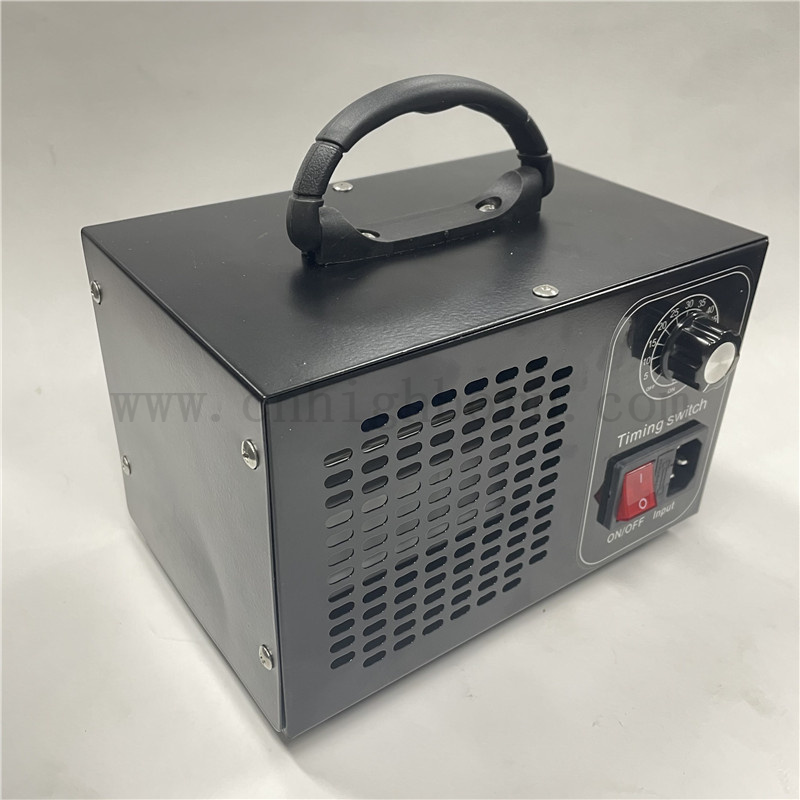
Decision-critical features protect the operator. Look for integrated countdown timers and delayed starts. A delayed start allows you to exit the building before gas production begins. Replaceable ceramic plates ensure long-term usability in the field. Remote control or app integration provides safer operational management from outside the hazard zone. A heavy-duty metal casing protects the internal components from job site abuse.
A strict operational protocol ensures both efficacy and safety. Follow these steps meticulously on every job.
Failing to clean the physical source guarantees failure. You must remove the pet urine-soaked carpet pad or wipe down the soot from the walls. Use standard detergents to clean all hard surfaces. If the physical contaminant remains, the odor will return once the gas dissipates. The gas is a finishing step, not a replacement for elbow grease.
Seal HVAC intake and supply vents using poly sheeting and painter's tape. This prevents gas from spreading to occupied zones or neighboring units in an apartment building. Close and seal windows, exterior doors, and keyholes. Set up oscillating fans. While ozone is denser than air, natural gravity stratification is limited under field conditions. Oscillating fans generate continuous air circulation to achieve uniform ozone distribution within the enclosed area.
Size the run-time based on calculated space volume and contamination severity. A standard room might take two hours, while a whole house with severe smoke damage might require a 24-hour cycle. Monitor the exterior perimeter to ensure no leakage occurs during the active cycle. Place warning signs on all exterior doors.
Allow a standard 2-to-4-hour wait time for natural decomposition after the machine shuts off. For faster turnarounds, use commercial carbon-filter scrubbers to rapidly drop concentration levels. Once safety thresholds are verified via sensors, open windows and run fresh-air intake fans to complete the ventilation protocol. Do not allow clients back into the building until the air tests clean.
Calculate your exact cubic footage to determine the required mg/hr output before purchasing or renting equipment.
Remove all physical sources of odor and clean surfaces manually prior to starting any gas-phase treatment.
Evacuate all humans, pets, and plants from the treatment zone and seal HVAC vents to prevent gas migration.
Purchase and use a digital electrochemical sensor to verify that ozone levels have dropped below safe thresholds before allowing re-entry.
A: Ozone has a half-life of roughly 30 minutes under standard conditions. It continuously breaks down into diatomic oxygen. A 2-to-4-hour safe re-entry window is recommended to ensure all residual gas has fully decomposed before humans or pets return.
A: It kills exposed, airborne mold spores and surface growth. However, it does not penetrate walls to destroy underlying moisture sources or root structures (hyphae). Physical remediation is required for permanent mold removal.
A: No. Regulatory agencies strictly warn against exposure to shock treatment levels. The gas is a severe respiratory irritant and damages lung tissue. The premises must be entirely vacant.
A: It produces a distinct, sharp scent often described as an electrical storm or metallic bleach. This odor indicates the presence of the gas, but smell alone cannot determine if concentrations are at safe levels.
A: Prolonged or excessively high-concentration exposures pose risks. The oxidative process can degrade rubber belts, wire casings, and potentially affect motherboard solder joints over time. Sensitive electronics should be covered or removed.
A: A basic rule of thumb is 1,000 mg/hr per 100 square feet with standard 8-foot ceilings for typical odors. Severe contamination requires higher output. Always base calculations on total cubic footage rather than just square footage.